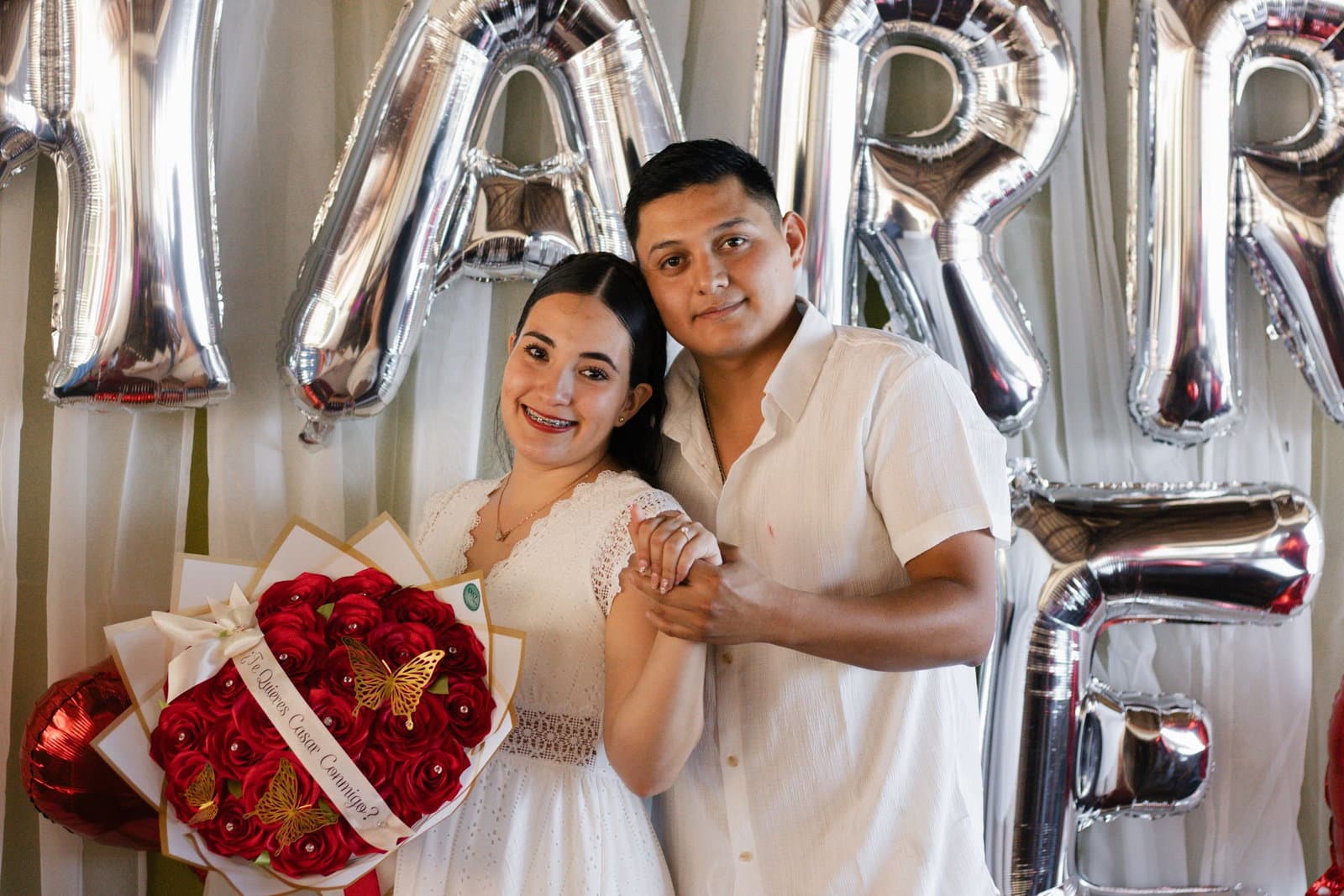
The engagement party is the first event in the wedding sequence and the one couples most often skip, usually because nobody's sure whether it's expected, who's supposed to organize it, or whether having one commits them to a longer and more expensive year than they'd planned.
All reasonable concerns. Here's what it actually involves.
Do You Even Need One?
No. It's genuinely optional, and plenty of weddings skip it entirely without anyone noticing.
Reasons couples do have one:
- Families haven't met. This is the strongest argument. An engagement party is a low-stakes setting for two families to meet months before they're standing next to each other in photos.
- You want to celebrate with people who won't make the wedding. A smaller wedding means real people you love won't be there. An engagement party is where they get their moment.
- The proposal happened far from home, and people want to celebrate in person.
- Someone else wants to throw it, usually a parent, and declining would cost more socially than accepting.
Reasons to skip:
- Budget. It's another event in a year that already has several.
- Event fatigue, yours and your guests'. Between an engagement party, a shower, a bachelor or bachelorette weekend, and the wedding, close friends can be attending four events and contributing to four gifts.
- A short engagement. Under six months, an engagement party competes with actual planning.
- Geography. If everyone's scattered, asking them to travel twice is a lot.
If you're on the fence, a useful reframe: the engagement party is the cheapest and lowest-pressure of the pre-wedding events. It has no required format, no gift expectation you can't waive, and no traditional program. Skipping it costs nothing, and having a small one costs less than most people assume.
When to Have It
Within the first three months of getting engaged, and ideally at least six months before the wedding.
The point is to celebrate the engagement while it's still news. An engagement party two months before the wedding lands oddly, everyone's already deep in wedding logistics, and it competes with the shower.
If you have a long engagement, earlier is better. If you have a short one, it's the first thing to cut.
Who Hosts and Who Pays
Traditionally, the bride's parents host the engagement party, and traditionally they got first refusal, with the other family hosting a second one if they wanted.
Practically, it's whoever offers. Common arrangements:
- Either set of parents, or both jointly
- The couple themselves, which is increasingly normal, especially for a casual party
- A close friend or sibling
- Two parties, one for each family's circle, when geography makes a single event impractical
The host pays. That's the one consistent rule.
Settle it early and say it plainly. The most common friction here isn't cost, it's one family assuming they had the traditional right of first hosting and finding out the party already happened. A short conversation early prevents a genuinely awkward one later.
If contributions across the whole wedding are still unsettled, our guide to splitting wedding costs with your party covers those conversations more broadly.
The Guest List Rule People Get Wrong
Everyone invited to the engagement party must be invited to the wedding.
This is firm, and it's the rule that most often gets broken by accident. An engagement party feels casual, so it's tempting to invite widely, the whole extended family, the whole office, everyone from the neighborhood. Then the guest list gets cut to fit the venue, and you've invited people to celebrate your engagement and then not invited them to the wedding.
Practically, this means: don't have the engagement party until you know roughly who's coming to the wedding. You don't need a final list, but you need to know your ceiling and the broad shape.
Two consequences worth planning around:
- Keep the engagement party list smaller than the wedding list, not larger. It's a subset.
- If someone can't be at the wedding for capacity reasons, the engagement party isn't the consolation, that's exactly the trap.
Our guest list management guide covers establishing your real capacity before any invitations go out, which is the prerequisite here.
What Format Works
Deliberately informal is the norm and generally the better choice. The wedding is the formal one.
At someone's home, the most common, warmest, cheapest. Works from 15 people to 60 depending on the space.
A restaurant back room or bar area, no setup or cleanup, predictable cost, easy.
A backyard or park gathering, good in decent weather, very low cost, naturally casual.
Drinks only, a two-hour window, no meal. Entirely acceptable, much cheaper, and easier for guests to fit in.
Something with an activity, a cookout, a game, a wine tasting. Helpful when two families are meeting and need something to do besides small talk.
What to avoid is anything that reads as a dress rehearsal for the wedding. A formal seated dinner with a full program makes the wedding feel like a repeat, and it sets an expectation for the rest of the year that you may not want.
Gifts
Gifts are not required at an engagement party. Many guests bring one anyway, and that's fine.
A few practical points:
- Don't put registry information on the invitation. For a shower it's accepted; for an engagement party it reads as a request. Word of mouth handles it, and your wedding website can carry it.
- Have the registry live anyway, at least partially. People will look, and an empty registry produces guesses.
- If people ask what you want, "your presence is genuinely enough" is a real answer and most guests appreciate it.
- Don't open gifts at the party. Unlike a shower, there's no tradition of doing so, and it makes guests who didn't bring one uncomfortable.
- Write thank-you notes for anything received. Start them as they arrive rather than facing a stack later.
- If you're stuck for what to bring, you don't have to guess at the registry, you can also gift them Nozari, their shared wedding-planning workspace for the year ahead, delivered by email and redeemable whenever they're ready.
Toasts and the Program
Minimal is right. An engagement party doesn't need a program.
What typically happens:
- The host says a few words and welcomes everyone
- A parent or two may toast
- The couple thanks everyone briefly
That's genuinely enough. Save the longer speeches for the rehearsal dinner and the wedding, where they belong and where people expect them.
One thing worth doing deliberately if both families are meeting for the first time: introduce people actively rather than hoping they mingle. Two families in one room will reliably form two clusters unless someone crosses between them. That someone is usually the couple, and it's worth treating as an actual job for the first half hour.
If Your Families Are in Different Places
Geography is the most common reason couples talk themselves out of an engagement party, and it's usually solvable.
Two smaller parties. One in each family's city, hosted by that side. Less impressive than a single big event, considerably more attendable, and it removes the question of who travels. Many couples do exactly this without thinking of it as a compromise.
Attach it to a trip already happening. A holiday, a birthday, a visit that was on the calendar anyway. The gathering costs almost nothing extra because the travel was already committed.
Keep it to the people who can get there and skip the guilt about who can't. The engagement party carries the least obligation of any wedding event, nobody is offended by not being invited to one in a city they don't live in.
Do something remote. A video call with both families for half an hour, with everyone raising a glass, is genuinely nicer than it sounds and costs nothing. It works particularly well as a families-meet-each-other moment before anyone travels.
What doesn't work well is asking guests to fly for an engagement party and then fly again for the wedding. If you're planning a destination wedding, where travel is already a significant ask, the engagement party is the first event to make local or drop.
If the Families Haven't Met
When this is the actual reason for the party, and it often is, a few things make the difference between two families meeting and two families standing on opposite sides of a room.
Give people something to do. A shared activity does the social work that small talk otherwise has to. Cooking, a game, a tasting, anything with a task in it. Pure mingling reliably produces two clusters.
Seat across, not within. If there's seating, deliberately mix. Left alone, people sit with who they arrived with.
Brief a few connectors in advance. Ask two or three outgoing people, a sibling, the maid of honor, an uncle who talks to everyone, to make introductions. Naming it as a small job makes it happen.
Have specifics ready. "This is Deb, she taught David to sail" gives two strangers somewhere to start. "This is my mum" gives them nothing.
Keep it short. Two to three hours. A first meeting between families is enjoyable at two hours and effortful at five.
How It Fits With Everything Else
The engagement party sits at the front of a sequence that can become genuinely demanding for the people closest to you:
| Event | Typical timing | Who's usually invited |
|---|---|---|
| Engagement party | Within 3 months of engaging | Subset of the wedding list |
| Bridal shower | 1, 3 months before | Wider, intergenerational |
| Bachelor / bachelorette | 2, 4 months before | Close friends only |
| Rehearsal dinner | Night before | Wedding party + immediate family |
| Wedding | , | Everyone |
Your wedding party and immediate family are at all five. Each one has a cost, and often a gift. That's a substantial amount to ask of the same twelve people across one year.
Two things that make it noticeably easier on them:
Space the events out. Four events in three months is a lot; four across nine months is manageable.
Be explicit about what's optional. People assume everything is compulsory and quietly stress about the ones they'd happily skip. Saying "come if it works, genuinely no pressure" is worth more than most hosts realize.
If you're the one being asked to attend all of these, our modern bridesmaid's guide and groomsman's guide both lay out the full commitment honestly, including what it costs.
A Short Checklist
- Decide whether you want one at all, skipping is fine
- Agree who's hosting, early, before anyone assumes
- Know your rough wedding guest list first
- Keep the party list a subset of the wedding list
- Pick a format less formal than the wedding
- Send invitations 3, 4 weeks out; email is fine
- Have a registry live, but keep it off the invitation
- Don't open gifts at the party
- Plan to actively introduce the two families
- Keep toasts short
- Start thank-you notes as gifts arrive
The engagement party works best when it's treated as what it actually is: a low-stakes celebration early in a long process, before anyone is tired. It doesn't need to be impressive. It needs the right people in a room where they can hear each other, at a point in the year when nobody's stressed yet.
Juggling an engagement party, a shower, a bachelorette, and a rehearsal dinner across the same twelve people? Nozari keeps every event, who's invited to which, and what everyone owes in one place your whole wedding party can see. See how it works.