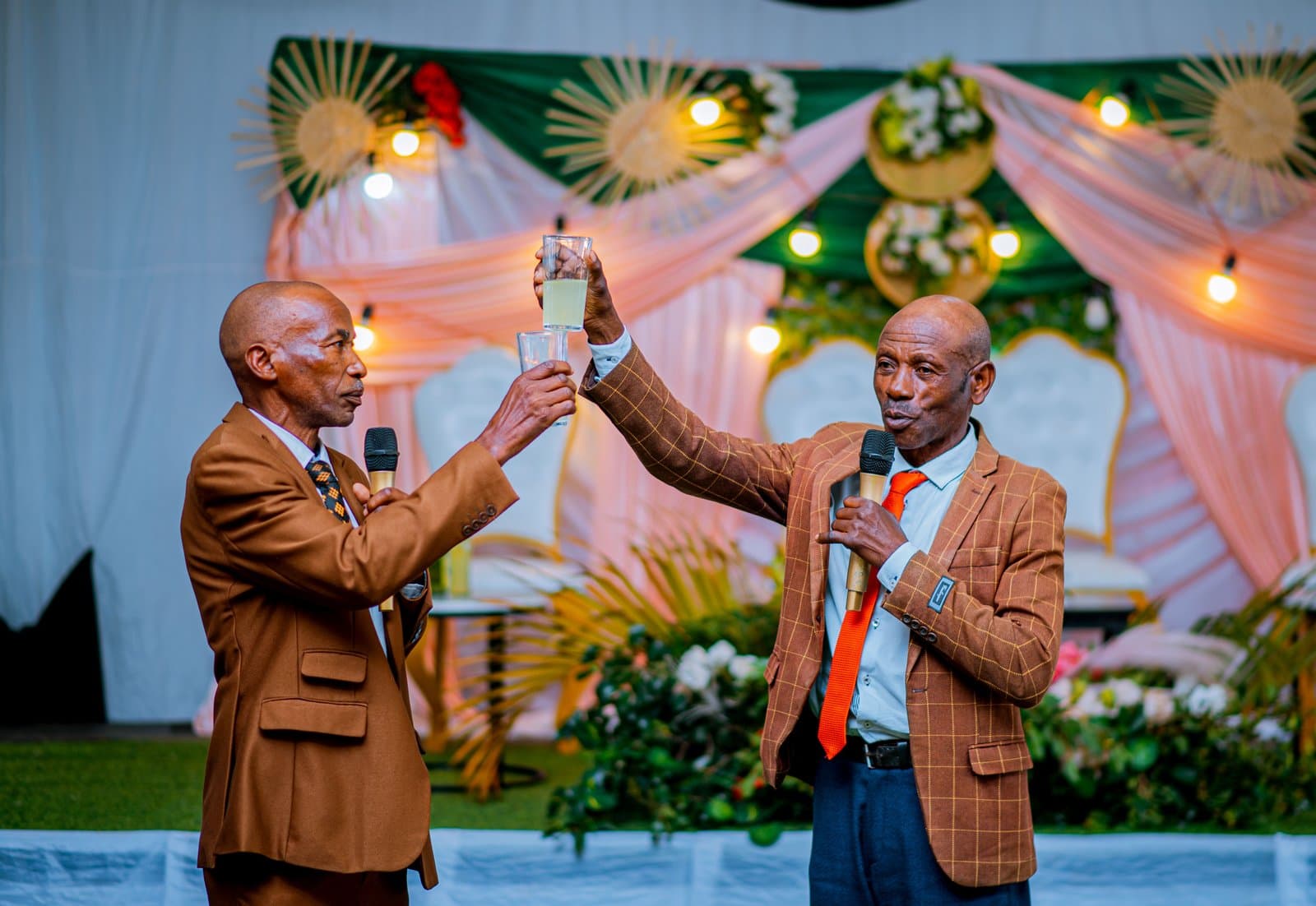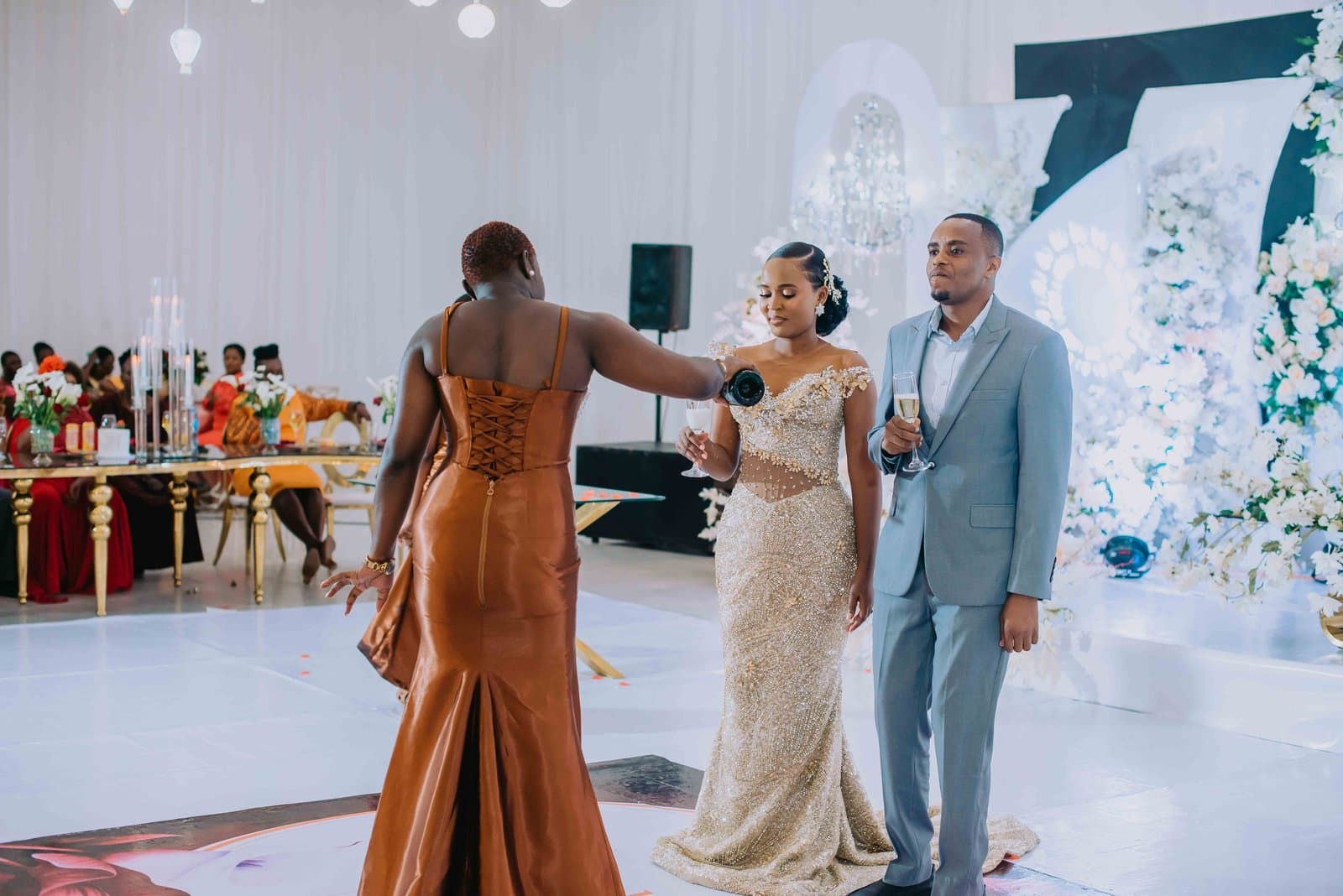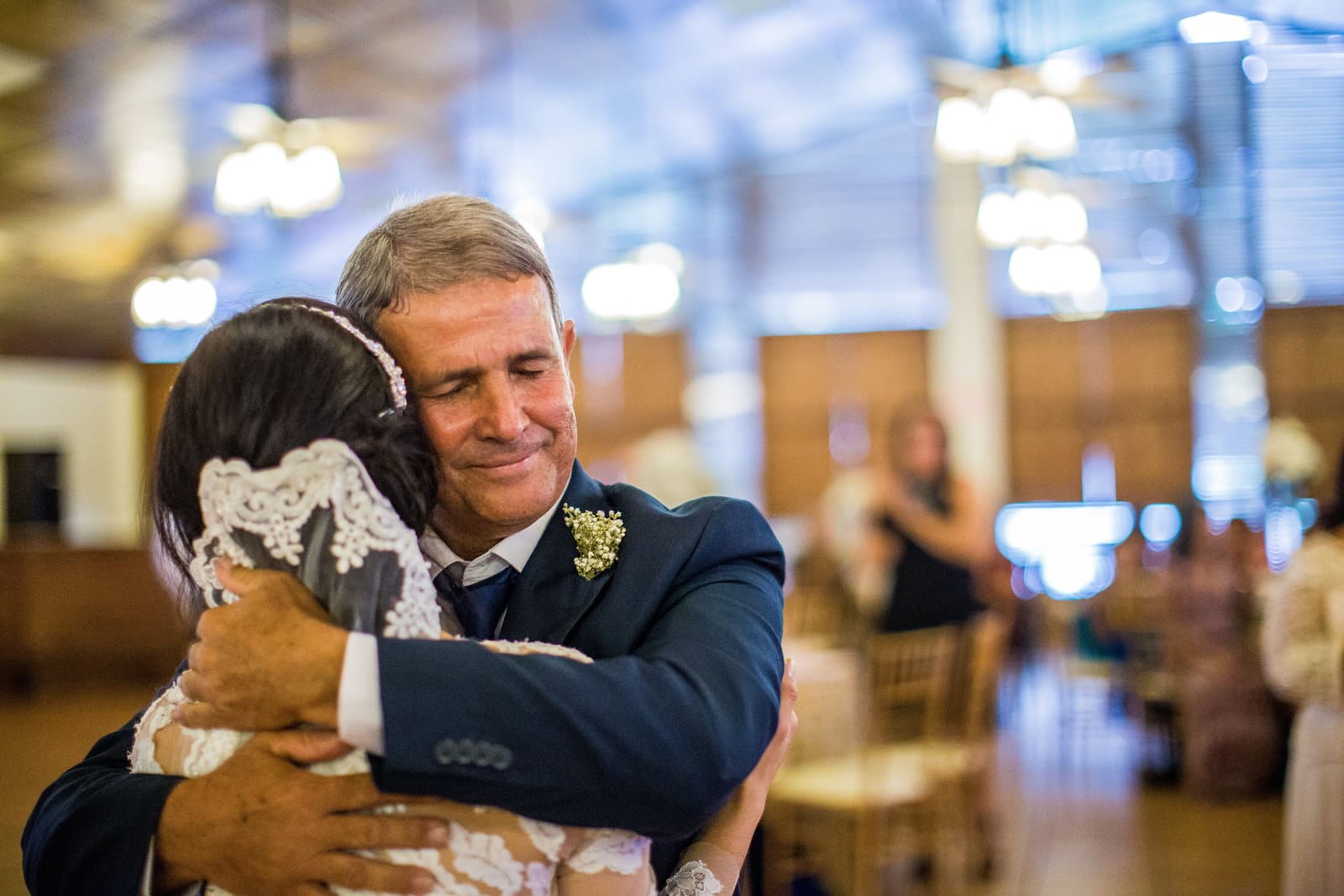
The father of the bride speech is usually the first one of the night, which means it sets the temperature for every speech after it. It is also, for most of the men who give it, the only speech they will ever give to a hundred and forty people about someone they love.
That combination produces two failure modes. The first is a four page document read at a lectern with the head down. The second is nothing written at all, on the theory that it will come from the heart, which it does, for eleven minutes, in no particular order.
The job is smaller and much kinder than either. Welcome the room, tell one story about your daughter, say one true thing to the person she married, and raise a glass. Three minutes. That is the whole assignment.
The Whole Speech in Four Beats
Welcome. One story. One line to them. The toast.
That shape works because it has a direction. You begin as the host, you turn to the person you have known her whole life, you turn again to the person she has just married, and you finish by handing the room something to do.
Write the four beats down before you write a sentence. If you cannot name your one story and your one line, you are not ready to draft, and staring at a blank page will not fix it.
A note on titles, since they vary. This outline works unchanged if you are the father of the groom, a stepfather, a mother giving the host's speech, an uncle or grandparent standing in, or two parents speaking together. The host's welcome is a job, not a gender. If two of you are speaking, split the beats rather than both doing all four, and keep the combined length to four minutes.
Three Minutes
Three minutes, or roughly 400 to 450 spoken words. Four at the absolute outside.
Yours is one of three or four speeches and the room's patience is a shared resource. A tight three minutes is remembered as moving. A loose eight is remembered as long, which is a shame for a speech that probably contained something lovely around minute six.
Read the draft against a timer, out loud and standing. Speaking pace is much slower than reading pace, and almost every speech that overruns was timed silently.
The Outline
Fill in the blanks. Each line is one or two sentences.
1. Welcome the room, in one or two sentences. You are the host, and this is the only speech where that is part of the job. "On behalf of Helen and myself, thank you all for being here, some of you from a very long way."
2. One line of thanks, at most. Anyone who travelled a great distance, or the couple's other parents. Not a list of nine.
3. One sentence that sets up the story. The thing about her the story is going to prove. "Claire has never once in her life been talked out of anything."
4. The story, in five or six sentences. One occasion, one place, one point. Details, not summary.
5. The turn. What the story says about who she is now. "That is the person you married, Sam. Good luck."
6. One honest line to the person she married. Directly to them, by name. Not about the wedding, not about how lucky they are.
7. A short good wish. One sentence.
8. The toast. "Please raise your glasses to Claire and Sam."
Eight lines, twelve or thirteen sentences, about three minutes. If you write nothing else, write that.
Finding the One Story
The best story is almost always small. It is a Tuesday, not a holiday. It shows one trait and the room recognises the trait.
She was six and negotiated her bedtime with a written argument. She drove four hours to a job interview in a car you were certain would not make it, and it did not, and she still got there. She taught herself the entire bus timetable at eleven so she would not have to ask for lifts. Those land because they are specific, and because the trait they point at is part of the reason two people are standing at the front of the room today.
Three tests before you commit:
- Is it about her, not about you? The most common fault in this speech is a story in which the father is the main character. If the point is how you felt, it is the wrong story.
- Does it need explaining? If you have to set up a nickname, a town, and three other people, it is not the story.
- Does it point at who she is now? A story only about the four year old is a story about nostalgia. The good ones show a thread from then to the woman at the top table.
One story told properly, with the details left in, beats four anecdotes stacked up. Rooms do not respond to summaries.
The Line to the Person She Married
This is the part that gets rushed, and the part people remember a year later.
Say it to them, by name, looking at them. One honest observation, said plainly, is worth more than three paragraphs of praise that could apply to anybody.
Shapes that work:
- What you noticed. "The first time you came to the house you did the washing up without being asked, and Helen has mentioned it approximately once a month since."
- What changed. "She has always been determined. Since you, she is also occasionally willing to sit down."
- What you are handing over. "We are not giving her away, she has not been ours to give for about fifteen years. But we are very glad it is you."
Leave out any version of "look after her", which lands oddly in 2026 and tends to make the room shift. Leave out the joke about having gained a son and lost a bathroom. And leave out anything about the cost of the wedding, which is the single most reliable way to make a hundred people slightly uncomfortable.
If you do not know them well, say so warmly and briefly, then say the true thing you do know. Honesty reads better than manufactured closeness every time.
What to Leave Out
Almost every father's speech that runs long contains these. Cut them all.
- The second and third story. One is enough. If you cannot choose, the one with the better detail wins.
- A full history of the family. Nobody has ever wanted the genealogy.
- Thanking every vendor and the venue. Not your job in the speech. A line to the staff at the end of the night does more.
- The embarrassing teenage material. You are her father. The room's tolerance for this from you is lower than it is from the best man, which is counterintuitive and true.
- Anyone she dated before. Not a word, not as a joke.
- The money. What the wedding cost, who paid for it, or any variation on "worth every penny."
- Any line that needs an apology in front of it. "I probably should not say this" is a reliable sign you should not.
Also cut the opener about not being good at speeches. Start with the welcome and get moving.
Writing It, and Then Rehearsing It
Four short sessions beat one long panic. Dump every memory you can think of in twenty minutes without editing. Sleep on it. Pick one. Draft to the outline. Then leave it for three days, because the sentence that felt right on Monday rarely survives Thursday.
Then rehearse out loud, standing, at full volume, at least five times. This sounds fussy and it is the highest return thing on this page.
Reading silently is roughly twice as fast as speaking, hides every clause that is awkward in the mouth, and tells you nothing about how you sound. Standing rehearsal finds the sentence you trip on, the name you fumble, and the ninety seconds of overrun. Learn your first line and your last two by heart, and rehearse the emotional part more than the rest, because the fifth time through is noticeably easier than the first.
On the Night
- Bring the card. Printed, one side, large type, in an inside pocket. Not on a phone, where a notification will find you mid-sentence.
- Know when you are on. The father of the bride traditionally speaks first, often just after everyone is seated or at the end of the main course. Confirm the running order with whoever is holding it, which our reception MC guide explains how to build.
- Pace yourself beforehand. One drink for the nerves is fine. Three is a different speech than the one you wrote.
- Stand still, look up, slow down. Hold a handheld microphone about a hand's width from your mouth, which is closer than feels natural, and pick three places to look: the couple, the middle tables, the back.
- If you get emotional, stop and breathe. Two seconds of silence is invisible from the floor and the room is entirely on your side. Have a sip of water, find your place on the card, carry on. Nobody has ever minded this.
- Say the toast properly. "Please raise your glasses", pause while the room actually picks them up, then both names. Drink, sit down, add nothing.
The speeches after yours get easier because of yours. If you set a warm temperature in three minutes, the best man has an easier job, and our guide to writing a best man speech builds on the same outline.
Common Questions
How long should a father of the bride speech be?
Three minutes, which is roughly 400 to 450 spoken words, and four at the outside. Time it out loud and standing rather than by reading, because speaking pace is much slower than reading pace, and cut rather than speed up if it overruns.
When does the father of the bride speak?
Traditionally first among the speeches, either just after everyone is seated or at the end of the main course. The exact slot is set by whoever is running the reception, so confirm it at the rehearsal rather than on the night.
What should a father of the bride say?
Welcome the room as the host, tell one specific story about your daughter, say one honest line directly to the person she married, offer a short good wish, and raise a glass. Four beats, in that order.
Should a father of the bride speech be funny?
It does not have to be. Warm and specific is the brief, and most of the laughs that land come from a true detail rather than a written joke. A sincere three minute speech is received better than a strained funny seven minute one.
Is it alright to read the speech from a card?
Yes, and most people should. A card held low and glanced at reads as prepared. What does not work is reading every word with your head down, so learn your opening and your closing by heart and use the card for the middle.
The Short Version
Welcome the room, one story about her, one honest line to the person she married, raise the glass. Three minutes, about 420 words, on an eight line outline. Choose the small specific story over the big one, and make sure she is the main character of it rather than you. Cut the family history, the money, the second story and everyone she dated before. Rehearse standing up, five times. Bring a printed card, hold the microphone close, and if you get emotional, pause and keep going.
Nobody has ever left a wedding wishing a father's speech had been longer, and nobody has ever minded one that was three minutes and true.
Speech slot, rehearsal time, and who is holding the running order? Nozari keeps the whole wedding party's tasks and timings in one shared place. See how it works.