Some of your guests will not respond by the deadline. Not out of rudeness, mostly: the card went in a drawer, the link opened on a phone at a bus stop and never got finished, the invitation arrived during a busy fortnight. Every couple ends up chasing somebody.
So the goal is not a deadline everybody honors. It is a deadline early enough that chasing people is a calm week rather than a frantic one, and a follow up sequence that works without anyone feeling nagged.
First, Find the Real Deadline
Your RSVP date is not a matter of taste. It is derived from one number: the date your caterer or venue needs a final headcount.
Work backwards.
| Step | When | Why |
|---|---|---|
| Final headcount to caterer and venue | usually 7 to 14 days before | Their contract sets this. Ask for the exact date |
| Seating chart finalized | 1 to 2 weeks before | Needs a near final list |
| Escort cards, place cards, printing | 1 to 2 weeks before | Needs confirmed names and spellings |
| Buffer for chasing non responders | 1 to 2 weeks | The part everybody forgets |
| Printed RSVP deadline | 3 to 4 weeks before | What goes on the card |
For most weddings that lands the printed deadline three to four weeks out. For a destination wedding, push it to five or six, because guests are booking flights and you need the numbers earlier anyway.
Two details worth getting right while you are in the contracts:
Ask every vendor with a per head number for their deadline, not just the caterer. Rentals, bar, transport, favors, and the cake all have one, rarely on the same date.
Ask what the change window is after the final count. Most caterers will let you add a couple of people late and almost none will let you subtract. Knowing the exact rule turns a late RSVP from a crisis into a phone call.
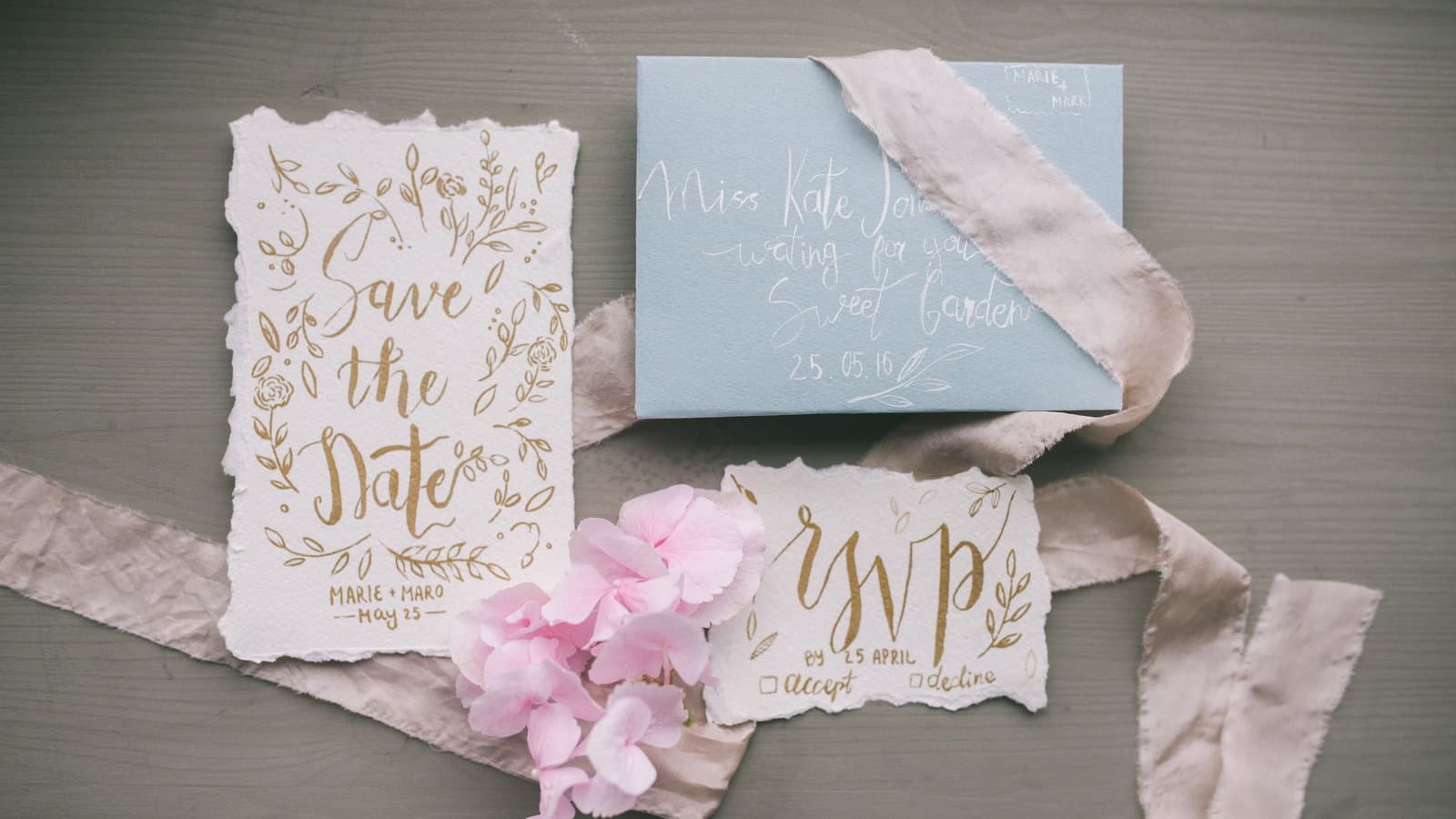
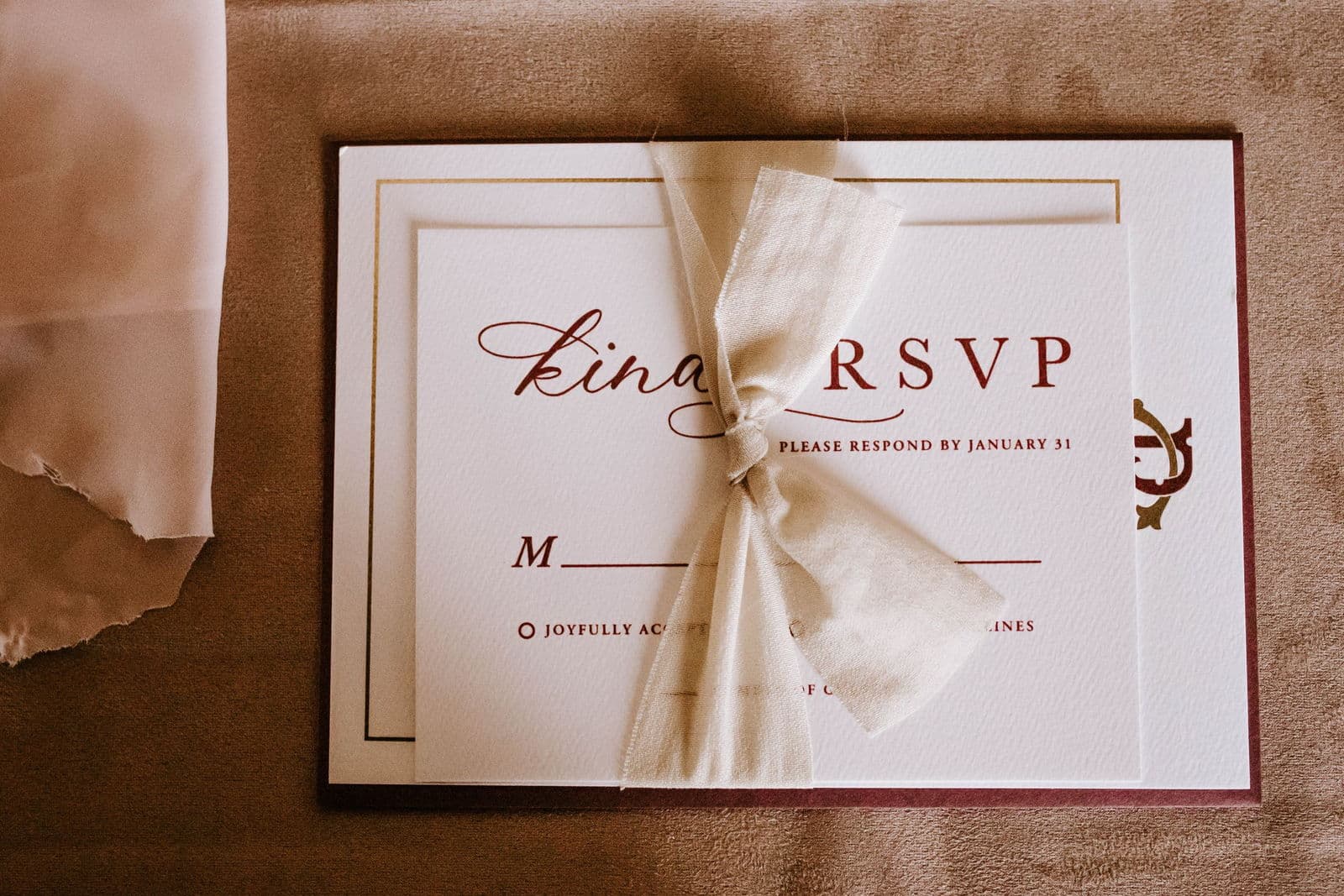
Then put the deadline on the response card as a specific date, not "by the end of the month", in a size somebody can read without holding it to a lamp. Our guide to when to send save the dates versus invitations covers where that date sits relative to the mailings.
Make Responding Genuinely Easy
Most non responses are friction, not reluctance. Remove the friction and the chase list shrinks on its own.
- Offer one method, not three. A card, or a link, not both plus an email address. Multiple channels means responses land in multiple places and somebody has to reconcile them.
- If digital, make the link short and the form shorter. Name, attending or not, meal choice, dietary notes. No account, no password, no app to install, and finishable on a phone in under a minute.
- If paper, include a stamped and addressed envelope. An unstamped reply card gets fewer replies, because it turns a thirty second task into an errand.
- Number the back of each reply card in pencil against your guest list. Cards come back with no name on them. This is the only reliable fix.
- Ask for the plus one's actual name, not just a headcount, which saves you a round of follow up when you build the seating chart.
All of it serves one thing: the response landing on the guest's record in a single list, rather than in a text thread, a card pile, and somebody's inbox. Our wedding guest list management guide covers the structure that holds this together at a hundred and fifty guests.
The Reminder Schedule
Three touches, in this order. Each one does a different job.
One week before the deadline: the light group nudge
One message to everyone who has not replied, or to the whole list if separating them is hard. Warm, short, no guilt.
Quick one from us: RSVPs for the 18th are due next Friday the 24th. If you have not had a chance yet, the link is here and it takes about a minute. If you already have, thank you, ignore us.
That last line matters. It makes the message safe to send to people who have already responded, so you do not have to perfectly segment your list.
The day after the deadline: nothing
Wait. Responses trickle in for two or three days after any deadline, and a reminder sent the next morning mostly reaches people who were about to reply anyway.
Two to five days after the deadline: the individual message
This is the one that works, and it is the only one that reliably does. One message per person or household, from a human, by whatever channel you would normally use to talk to them.
Hi Theo, hope you are well. We are finalizing numbers for the wedding this week and have not heard from you yet. Any chance you can let us know either way by Friday? Totally fine if you cannot make it, we just need to give the caterer a number.
Four things make it land. It is addressed to one person. It gives a reason, which is the headcount, not your feelings. It gives a new specific date. And it makes "no" an acceptable answer, which is what unsticks most non responders, because a good deal of silence is somebody who cannot come and has not worked out how to say so.
Around ten days after: the last pass
For the handful still outstanding, pick up the phone. A call is faster than a fourth message, and for older guests it is the only channel that was ever going to work. If a call is not realistic, send one final short message with a stated consequence:
Hi Dana, we have to confirm numbers with the venue tomorrow. If we do not hear from you I will put you down as unable to make it, and no hard feelings at all. Just let me know if that is wrong.
That is a clean close. It gives them a final easy out and lets you move on.
Who Should Do the Chasing
Ideally not the couple, at least not the whole list.
Chasing a hundred people is a few hours of low grade administrative work in the busiest month of the engagement, and it splits naturally. Give a parent their own side's older relatives, where a phone call works better anyway. Give an honor attendant the friend group. Keep the delicate ones for yourselves. The only requirement is that everyone marks responses in the same place, so two people are not chasing the same cousin.
The Plus One Rule
Most RSVP confusion is plus one confusion, and it is preventable with one habit: be explicit on the envelope and on the card.
- Address the envelope to the named invited people. "Ms. Dana Okafor and Mr. Theo Lin" means two seats. "Ms. Dana Okafor" means one. "Ms. Dana Okafor and guest" means one plus an unnamed guest.
- Pre print the number of seats on the response card. "We have reserved 2 seats in your honor" removes almost all ambiguity, and it is far kinder than hoping somebody infers it.
- Ask for the guest's name, because you will need it for the escort card and the seating chart regardless.
And to say it plainly: you are not obliged to give everyone a plus one. Common practice is to extend one to married, engaged, and cohabiting partners, to the wedding party, and to guests who would otherwise know nobody in the room. Whatever rule you pick, apply it consistently, because the only version of this that causes friction is a rule that appears to have exceptions.
If somebody replies with an extra person you did not invite, respond quickly, privately, and without apology for the policy:
So glad you can come. We are quite tight on numbers and have been keeping it to invited guests only, so it is just you on the list. I hope that is alright, and I am sorry to be strict about it.
Send that within a day. The longer it sits, the more they have assumed.
What to Do With Silence
At some point you stop asking and decide.
Set your own internal cutoff, usually three or four days before the caterer's deadline, and mark everyone still silent as not attending. Write that date down at the start.
Tell the people you have marked, with the final message above. You will usually get a reply within an hour, which is faintly annoying but useful.
Keep a short standby list if you had a B list. If four declines come in during the final fortnight, you can quietly extend a late invitation to one or two people you are close to. Do it by phone, say plainly that a space has opened up, and make clear there is no obligation.
Do not build the seating chart on guesses. A maybe is a no until it is a yes. Our wedding seating chart guide covers building it in layers, so a late change moves one person rather than the whole chart.
Late Yeses and Late Nos
A late yes is usually solvable. Most caterers will add one or two covers after the final count, sometimes at a surcharge. Ask them before you promise the guest anything.
A late no, especially in the final week, you are almost always paying for regardless. Reseat the table, tell the caterer anyway in case there is any flexibility, and let it go. Every wedding has two or three.
Common Questions
When should the wedding RSVP deadline be?
Three to four weeks before the wedding for most weddings, and five to six for a destination wedding. Set it by taking your caterer's final headcount date, which is usually 7 to 14 days before, and adding one to two weeks of buffer for chasing non responders and building the seating chart.
How do you remind guests to RSVP without being rude?
One light group reminder a week before the deadline, then individual messages two to five days after it. The individual message is what works. Give a practical reason, which is the caterer's headcount, offer a new specific date, and explicitly make "no" an easy answer.
What do you do when guests never RSVP?
Set an internal cutoff three or four days before your caterer's deadline, mark the silent ones as not attending, and send one final short message telling them so and inviting a correction. Most will answer within the hour.
Do you have to give every guest a plus one?
No. Common practice is to extend one to spouses, engaged and cohabiting partners, the wedding party, and guests who would otherwise know nobody. Pick a rule and apply it consistently, and state the number of reserved seats on the response card so nobody has to guess.
The Short Version
Get the caterer's final headcount date, add one to two weeks of buffer, and print that as your RSVP deadline, three to four weeks out. Offer one easy response method and ask for the plus one's name. Send one light group reminder a week before the deadline, wait, then message the silent ones individually two to five days after. Call the last few, then set an internal cutoff, mark the remaining silence as declines, and tell them so.
None of that is difficult. It is only unpleasant when the deadline was set too late to leave room for any of it.
Chasing RSVPs across a card pile, two text threads, and a spreadsheet only one of you can open? Nozari keeps the guest list, responses, plus one names, and meal preferences in one shared place, so the count is always current and the chasing can be split. See how it works.