A wedding reading is ninety seconds of work and three weeks of mild dread, which is a poor ratio. It is also the single easiest job in a wedding to do noticeably well, because almost everyone who gives one does the same two things wrong: they read it too fast, and they read it for the first time out loud at the rehearsal.
Fix those two things and you will be the reading people mention afterward. Here is the whole method.
What the Job Actually Is
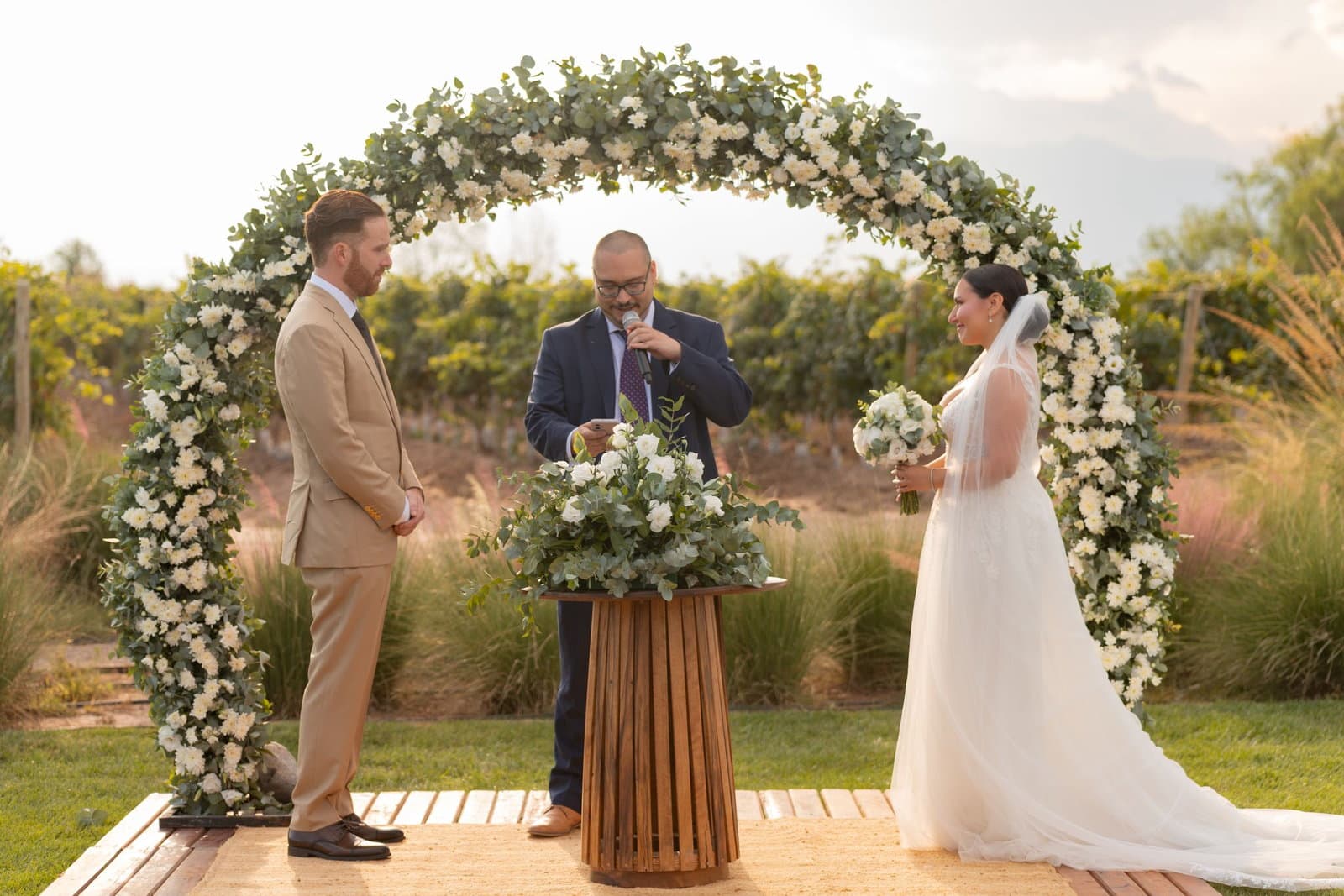
You will stand up, walk to the front, say the name of the piece and who wrote it, read somewhere between 100 and 250 words, and sit down. Most readings run one to two minutes. The ceremony usually has one or two of them, placed after the welcome and before the vows.
That is it. There is no speech, no introduction of yourself, no commentary at the end. The restraint is the craft.
Six Weeks Out: Get the Exact Text
Ask the couple for the reading in writing, not a title and not a screenshot of a search result. You want the exact words you will be saying, because translations and versions differ and the one in your hand needs to match the one they chose.
Specifically, ask for:
- The exact text, copied and pasted or photographed from the page they want
- The title and the author's full name, and the translation if it is scripture
- Where in the ceremony it falls, and who speaks immediately before you
- Whether the couple wants it read as written or trimmed
- How they want to be referred to, if your reading mentions them at all
Six weeks is not precious about itself. Four is fine. The point is to have the words long enough that you are bored of them, because boredom is what calm sounds like from a lectern.
If They Ask You to Choose
Some couples hand the choice to the reader, which is a compliment and a small trap. A few filters that work:
Short wins. Under 250 words. A long reading in the sun is a long reading.
Concrete beats abstract. Passages about specific things, a kitchen, a garden, two people being ordinary together, land harder than passages about Love as a concept.
Read it aloud before you propose it. Anything with four subordinate clauses in a sentence looks fine on a page and falls apart in a mouth. If you stumble reading it alone in your kitchen, you will stumble at the altar.
Avoid anything that is secretly about grief, or about you. Some beloved passages turn, halfway through, into something about loss. Read to the end. And a reading is not a place to reference your own history with either person.
Send two options, not one. "Either of these feels right to me, which do you prefer?" gives the couple a decision rather than a veto.
Common choices run from scripture to mid century poetry to a paragraph lifted from a novel, and plenty of couples now use song lyrics or a passage from a children's book. Any of it works. Send your shortlist and let them pick.
Four Weeks Out: Read It Aloud Ten Times
Out loud. Standing up. Not in your head on the train.
Reading silently rehearses comprehension. Reading aloud rehearses breath, and breath is the entire difference between a reading that lands and one that sounds like a terms of service agreement. Ten passes is roughly where the words stop requiring attention, which frees you up to think about pace.
While you do it, mark up your copy:
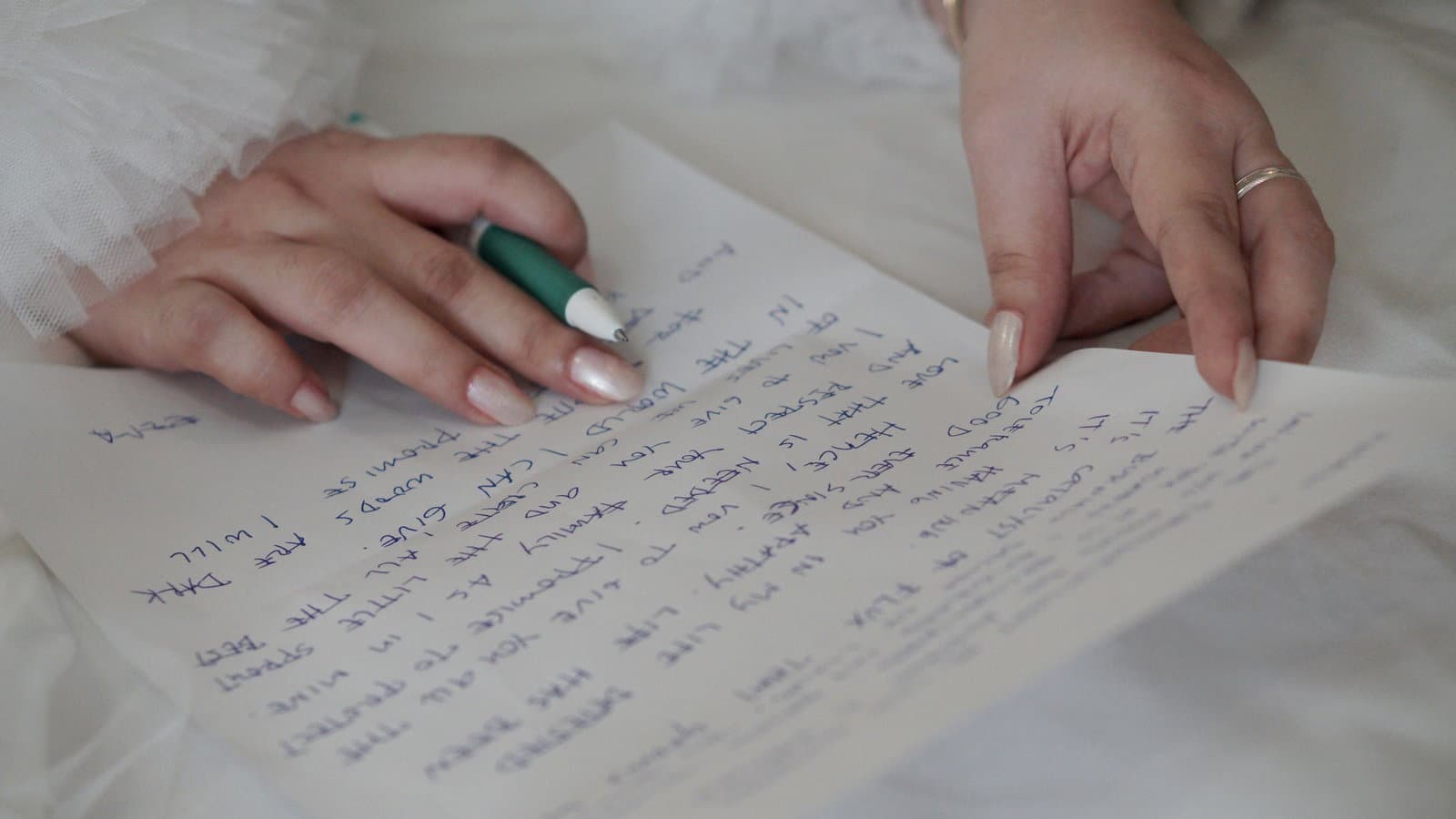
- Draw a single slash where you want a short pause, a double slash for a longer one
- Underline the two or three words that carry the sentence, and nothing more
- Circle any name, place, or word you are not certain how to pronounce, then look it up or ask
- Write SLOW at the top of the page in capitals, because you will need telling
Time yourself once. If you are reading 200 words in under a minute, you are going too fast. A comfortable public reading pace is somewhere around 120 to 140 words a minute, which is noticeably slower than conversation.
The Week Before: Print It Properly
Print the reading in 16 to 18 point type, double spaced, on one side of one page. Do not read from a phone. Screens dim at the worst moment, notifications arrive, and a phone in your hands shows up in every photograph of the ceremony.
Put the page in something that holds its shape: a plain folder, a small card, a slim binder. A single loose sheet shakes visibly in nervous hands, which is a thing guests notice and readers never do.
Then give a second printed copy to someone else in the wedding party, and keep a photo of it on your phone as a last resort.
If there is a rehearsal, use it. Stand where you will actually stand, with the microphone where it will actually be, and read the whole thing once at the pace you intend to use. The officiant usually runs that evening and will give you a cue, so find out what it is. Our guide to officiating a friend's wedding covers the rehearsal from the other side, including why your cue should be your name and not a nod.
The Script: Say the Title and the Author
There is a standard shape to the first and last ten seconds, and using it makes you sound like someone who has done this before.
Walk up. Set the page down or hold it at chest height. Look at the guests for a beat. One beat, not three. Long enough to arrive.
Say what it is.
A reading from Union, by Robert Fulghum.
Or, for scripture, the book and the verses. Then pause, properly, for about a second and a half. That pause tells two hundred people to stop rustling, and it is the most useful thing in this article.
Read it. Half the speed that feels natural. Look up twice, in the two places you underlined, and then go back to the page. Do not try to read the whole thing from memory while making eye contact; that is a different skill and the altar is a poor place to practise it.
Land the last line. Slow down on the final sentence and stop cleanly. Do not let your voice drift up at the end as though you are asking a question.
Then stop. No "and I just want to say". No turning to the couple to add something. Close the folder, look up once, and walk back to your seat. The silence after a reading belongs to the room.
On the Microphone
Most readings are amplified, and most problems are mechanical.
- Stand close enough. A hand's width from a fixed mic, a fist's width below your chin for a handheld one
- Speak across it rather than straight into it, which softens the plosive sounds
- If it is on a stand set for someone much taller or shorter, adjust it. Take the three seconds. Everyone will wait
- Do not tap it, blow on it, or ask whether it is on. If it is dead, keep going and project; somebody will fix it
- Keep the page below the microphone, not in front of it, or you will amplify the paper instead of the words
If the ceremony is outdoors with no amplification, find out at the rehearsal how far the back row is and practise once at that volume. Outdoors with wind eats roughly a third of a voice.
What Usually Goes Wrong
Too fast. The universal error. Nerves compress time, and a reading that felt glacial from the front will have sounded normal from the fifth row. When in doubt, slower.
Too quiet. The second universal error, usually from readers who are worried about seeming theatrical. You are not shouting, you are filling a room.
Reading cold. The reader who has only ever read it silently will discover their own breathing pattern in public.
Editorializing. Adding a sentence of your own at the end is the most common way a lovely reading becomes a slightly awkward one.
Mispronouncing a name. Entirely avoidable. Circle it, ask someone, say it aloud five times.
Crying. Fine, and common. Pause, breathe out, take a sip of water if there is any, and keep going. Nobody minds. Nobody has ever minded.
If You Have Been Asked and You Would Rather Not
Say so, early and plainly. "I would be honored but I am genuinely bad at reading in public, and I would rather not take this on" is a complete and acceptable answer in week one. It is a much harder thing to say in the final week, and the couple would far rather hear it now.
Readings get reassigned constantly and it is not a slight. If you want to stay involved in the ceremony without a lectern, offer something else: handing out programs, keeping the rings, or carrying the day of kit. Our breakdown of who does what on the wedding day has plenty of jobs that need a reliable person and no microphone.
Common Questions
How long should a wedding reading be?
Most run one to two minutes, which is roughly 100 to 250 words. Two short readings land better than one long one, and anything over three minutes starts to feel like a sermon regardless of how good it is.
Do I introduce myself before reading?
Usually not. The officiant introduces you by name and your relationship to the couple, then you say the title and author and begin. If there is no officiant introduction, one short sentence is plenty: "I'm Dana, Priya's sister, and this is a reading from..."
Can I read from my phone?
You can, and it is worth not doing. Screens dim, notifications appear, and a phone is visible in every ceremony photograph. Print it at 16 to 18 point type and put it in a folder instead.
What if I get the words wrong?
Keep going. A misread word is invisible to everyone who does not have the text in front of them, which is everybody. Stopping to correct yourself is the only version of this that guests notice.
Who chooses the reading, the couple or the reader?
The couple, usually, and plenty of them hand the choice to the reader as a gesture. If it comes to you, send two short options rather than one and let them choose. Either way, confirm the exact text in writing so there is no mismatch between the version you practised and the version they meant.
The Short Version
Get the exact text at least four to six weeks out. Read it aloud, standing, ten times, with a timer and a pen. Print it at 16 to 18 point in a folder, and give a spare to someone. Say the title and the author, pause for a second and a half, then read at half the speed that feels natural. Look up twice. Land the last line, close the folder, sit down.
The reading is ninety seconds long. The only thing that separates a good one from a forgettable one is that somebody practised out loud and then slowed down.
Keeping readers, cues, and arrival times straight across a whole wedding party? Nozari puts the ceremony timeline and everyone's jobs in one shared place, so nobody is guessing at their cue from a six week old message. See how it works.