By the time the wedding day actually arrives, months of planning have theoretically answered every logistical question, except one that tends to surface right in the getting-ready suite: who's actually doing what today?
Everyone in the wedding party wants to help. Almost nobody has a clear, written sense of their specific job for the day, which means well-meaning people either hover anxiously waiting for direction or step on each other trying to handle the same small task. A little role clarity, decided before the day begins, fixes this completely.
Here's how day-of responsibilities typically divide across a wedding party, and how to make sure everyone actually knows their role in advance.
Why Role Confusion Happens in the First Place
By the wedding day itself, most couples have made hundreds of decisions, vendors, seating charts, menu choices, but relatively few weddings have a written answer to the much simpler question of who's doing what today. It's not that anyone's being careless; it's that day-of roles feel obvious in the abstract ("the maid of honor helps the bride," "the best man has the rings") until the day actually arrives and six people are standing in a getting-ready suite, each unsure whether they should be the one handling the delayed florist delivery.
The fix isn't complicated, but it does require someone to actually sit down and assign roles on purpose, rather than assuming everyone will intuitively know their lane once the day begins.
The Couple: Show Up and Be Present
This sounds obvious, but it's worth saying directly: the couple's only real job on the wedding day is to be present for their own wedding. Every role below exists specifically to protect that, to absorb the logistics so the couple isn't fielding vendor questions or chasing down a missing boutonniere while trying to enjoy getting married.
If you're the couple, the best thing you can do in the weeks before is delegate clearly, so nobody comes looking for your input on the day itself unless it's genuinely necessary.
Maid of Honor: The Bride's Right Hand
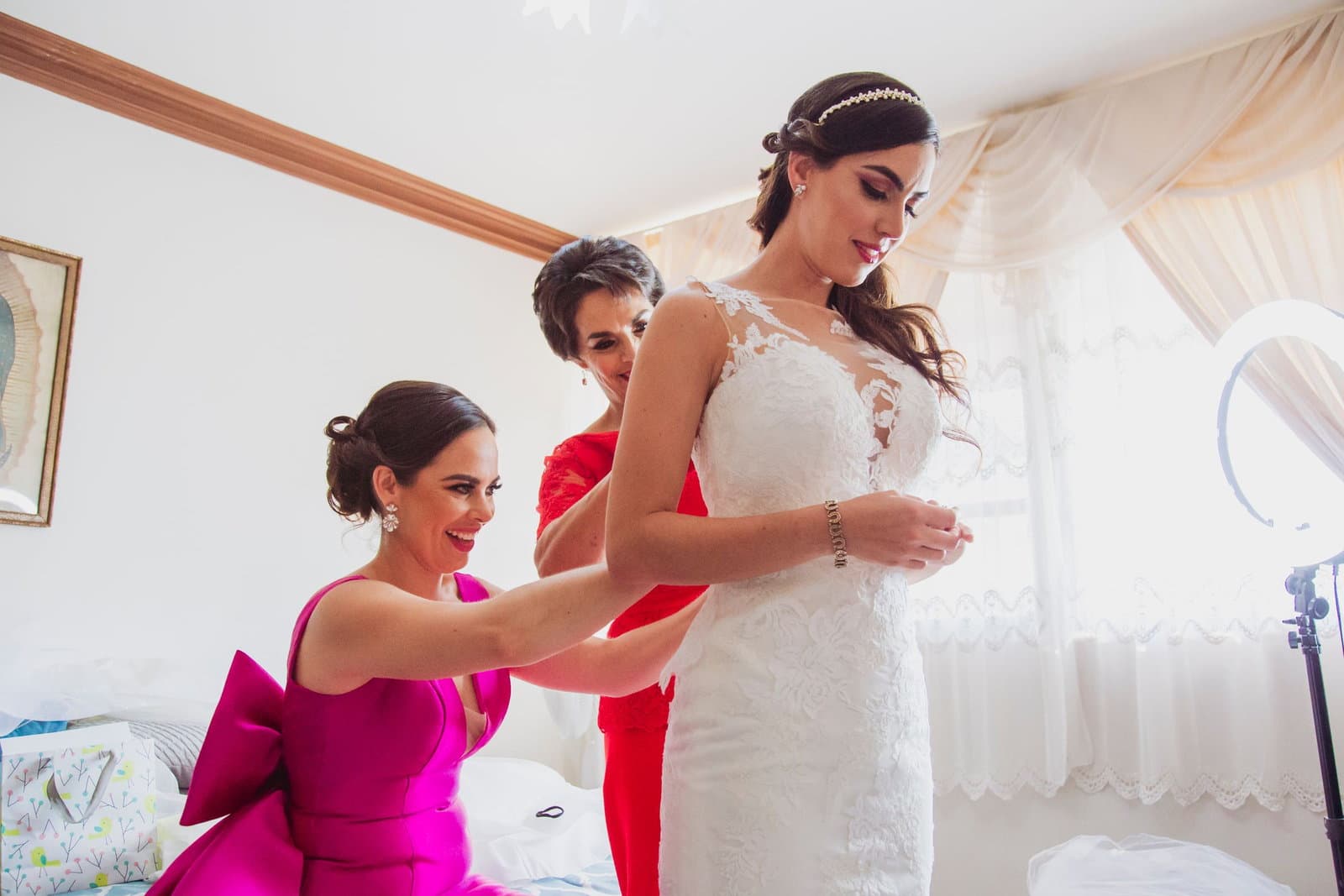
The maid of honor's day-of role centers on staying physically close to the bride and handling anything she shouldn't have to think about:
- Managing the getting-ready timeline, keeping hair, makeup, and dressing on schedule
- Holding onto small essentials, lipstick for touch-ups, a phone, an emergency kit, during the ceremony
- Bustling the dress after the ceremony, if needed
- Being the calm point of contact so logistics questions get routed away from the bride
- Giving the toast at the reception, typically one of the evening's two headline speeches
For the full scope of what leads up to this day, showers, bachelorette planning, coordination throughout the engagement, see our maid of honor checklist.
Best Man: The Groom's Steady Presence
The best man's day-of role mirrors the maid of honor's, on the groom's side:
- Helping the groom get ready and stay on schedule without adding pressure
- Holding and safeguarding the rings until the ceremony
- Handling small logistics quietly, a delayed vendor, a timing adjustment, anything that shouldn't become the groom's problem on his wedding day
- Giving the toast, usually paired with the maid of honor's speech
Our best man duties timeline covers everything from the bachelor party through the final speech, if you want the fuller picture of how the day-of role fits into the months before it.
Junior Attendants and Extended Family Roles
Many weddings include roles beyond the core party, flower girls, ring bearers, ushers, or a grandparent participating in the processional. These roles are usually simpler in scope but benefit just as much from clear, written instructions. A flower girl's family needs to know exactly when and where to be for lineup, not just "sometime before the ceremony." An usher needs a specific window to be seating guests, and a clear answer to what to do if someone arrives after the ceremony has already started.
If your wedding includes any of these roles, don't assume the instructions will trickle down informally through the wedding party. A short, direct note to whoever's responsible for briefing them (often a parent, for a flower girl or ring bearer) closes this gap.
Bridesmaids and Groomsmen: Support and Presence
Wedding party members without an "honor" title still have real, useful day-of jobs, they're just typically more specific and time-boxed:
- Helping wrangle family members for photos, since this is consistently where wedding day timelines run long
- Assisting with small tasks during getting-ready, zipping dresses, distributing boutonnieres, keeping snacks and water available
- Greeting and directing guests at the ceremony, if the couple wants a more personal welcome than a program alone provides
- Participating in the processional and photos on the schedule they've been given
- Being available for whatever comes up, without needing to be assigned a task every hour, a lot of the value here is simply having extra hands present
If your wedding party is large, it's worth assigning one or two specific tasks per person rather than leaving everyone in a vague "help out" role. Specific, small assignments (one bridesmaid manages the guest book table, one groomsman confirms the DJ has the couple's entrance song) get done more reliably than open-ended good intentions.
Parents: A Mix of Ceremony and Emotional Roles
Parents' day-of responsibilities vary more by family and cultural tradition than any other role, but common threads include:
- Participating in the processional, if that's part of your ceremony structure
- Being available for family photos at the scheduled time, and helping wrangle extended family, since parents often have more influence here than the wedding party does
- Handling any parent-specific ceremony moments, readings, unity rituals, a parent dance at the reception
- Occasionally fielding vendor or family logistics questions, especially if they're contributing financially and vendors default to contacting them
If parents are covering any costs directly, make sure vendor point-of-contact expectations are set clearly in advance, so a caterer or venue coordinator isn't trying to track down three different people mid-event with a question.
The Day-Of Coordinator (Professional or Designated Friend)
Whether you've hired a professional or assigned this to a highly organized friend or family member, someone needs to own the actual timeline on the day. This person's job is to:
- Track the schedule in real time and gently keep things moving without visibly stressing anyone out
- Field vendor questions so they're not routed to the couple or wedding party
- Handle the inevitable small problems, a chair short at a table, a late arrival, a timing shift, quietly and without fanfare
- Communicate any necessary adjustments to the people who need to know, clearly and calmly
If nobody owns this role explicitly, it tends to default informally to the maid of honor or a parent, which pulls them away from their actual job of being present with the couple. Naming this role deliberately, even if it's an organized friend rather than a hired professional, makes a real difference.
Vendors: Their Own Lane, With One Point of Contact
Photographers, caterers, DJs, and florists all have their own detailed day-of plans, but they function best with a single point of contact from the wedding side, usually the coordinator, sometimes the best man or maid of honor, rather than fielding questions from six different people. Share vendor contact information and timing expectations with this point person well before the wedding day, not the morning of.
How to Actually Assign These Roles (So Nobody's Guessing)
Knowing the general shape of who-does-what is only useful if it actually gets communicated. A few practices that make this land:
- Write it down, not just discuss it. A verbal "you'll handle the rings" mentioned in passing months ago gets forgotten. A written, shared reference doesn't.
- Share role assignments at least a week before the wedding, not the morning of, so people have time to ask questions or flag conflicts.
- Be specific about timing, not just tasks. "Help with family photos" is vaguer and less useful than "help gather the Smith family for the 3:00 PM photo block."
- Give everyone visibility into the full day, not just their own slice, it helps the wedding party understand how their piece fits into the larger flow, and makes it easier for people to jump in and help elsewhere if something runs long.
This is exactly the gap between a nice idea and a smoothly executed wedding day: a shared, specific, easily accessible plan that everyone can see, rather than a collection of individual assumptions about who's supposed to be doing what. Our wedding day timeline template pairs well with this, build the hour-by-hour schedule first, then layer role assignments on top of it so both the when and the who are clear to everyone.
When Roles Overlap or Feel Unclear
Even with the best planning, some day-of situations don't map cleanly onto a single role, a family emergency, a vendor no-show, a guest who needs help finding their seat. In these moments, the working principle is simple: whoever notices the problem first and is capable of solving it quietly should just handle it, rather than searching for the "correct" person whose job it technically is.
This is where having a designated coordinator (professional or not) matters most, they become the default owner of anything that doesn't obviously belong to someone else, which frees the wedding party and family to stay focused on their actual roles: supporting the couple and being present for the day, rather than troubleshooting logistics.
Bringing It All Together
The wedding party pages for maid of honor and best man go deeper into what each of these specific roles looks like across the full engagement, not just the wedding day itself, worth a look if you're the one holding either title and want the complete picture. And our broader wedding party resources cover how all these roles fit together as a coordinated group, rather than a collection of individuals each guessing at their own job.
A wedding day runs smoothly not because every single detail goes exactly to plan, something always shifts, but because everyone involved knows their role well enough to adapt without needing direction from the couple. Decide the roles ahead of time, write them down, and share them clearly. It's a small amount of upfront coordination that pays off in a noticeably calmer day for everyone, especially the two people it's actually about.
To make the "decide and write it down" part concrete, our free wedding party responsibilities matrix template gives you a role-by-responsibility grid to fill in and share, a starting structure instead of a blank page.
Want everyone's day-of role in one place your whole wedding party can actually see? Nozari's day-of coordination tools let you assign tasks by name, build your run-of-show ahead of time, and switch it live on the day itself, so nobody's guessing what they're supposed to be doing.