Mismatched bridesmaid dresses are one of the most practical ideas in modern weddings. Every bridesmaid can wear something that fits her body, her budget, and her taste, and the group still looks like a group. When it goes well, it looks effortless and a little editorial. When it goes badly, it looks like six people who did not talk to each other.
The difference is almost never the dresses. It is the brief. This guide covers the main ways to build a mix and match look, the fabric and length rules that keep it cohesive, how to explain it to your party, how to keep it fair on cost, how to make it work in photos, and how the same idea applies to groomsmen.
Why Couples Choose Mix and Match
A few honest reasons, and they are good ones:
- Fit and comfort. A single dress rarely flatters every body type. Letting people choose a cut they feel good in changes how the whole group carries itself.
- Cost control. Bridesmaids can shop at the price point that works for them instead of buying one expensive style.
- Rewearability. People are more likely to wear a dress again when they picked it.
- Less coordination. No shared order deadline, no single sizing chart, no waiting on one delivery.
- A relaxed look. The result tends to feel more personal and less uniform.
It also has real tradeoffs. You give up some control, and you need to be clear about the guidelines. If you want everyone in exactly the same dress, that is a perfectly good choice. Mix and match is for couples who want cohesion without conformity.
Pick a Palette Approach
Before anything else, decide how the dresses will relate to each other. There are four common approaches, and they produce quite different looks.
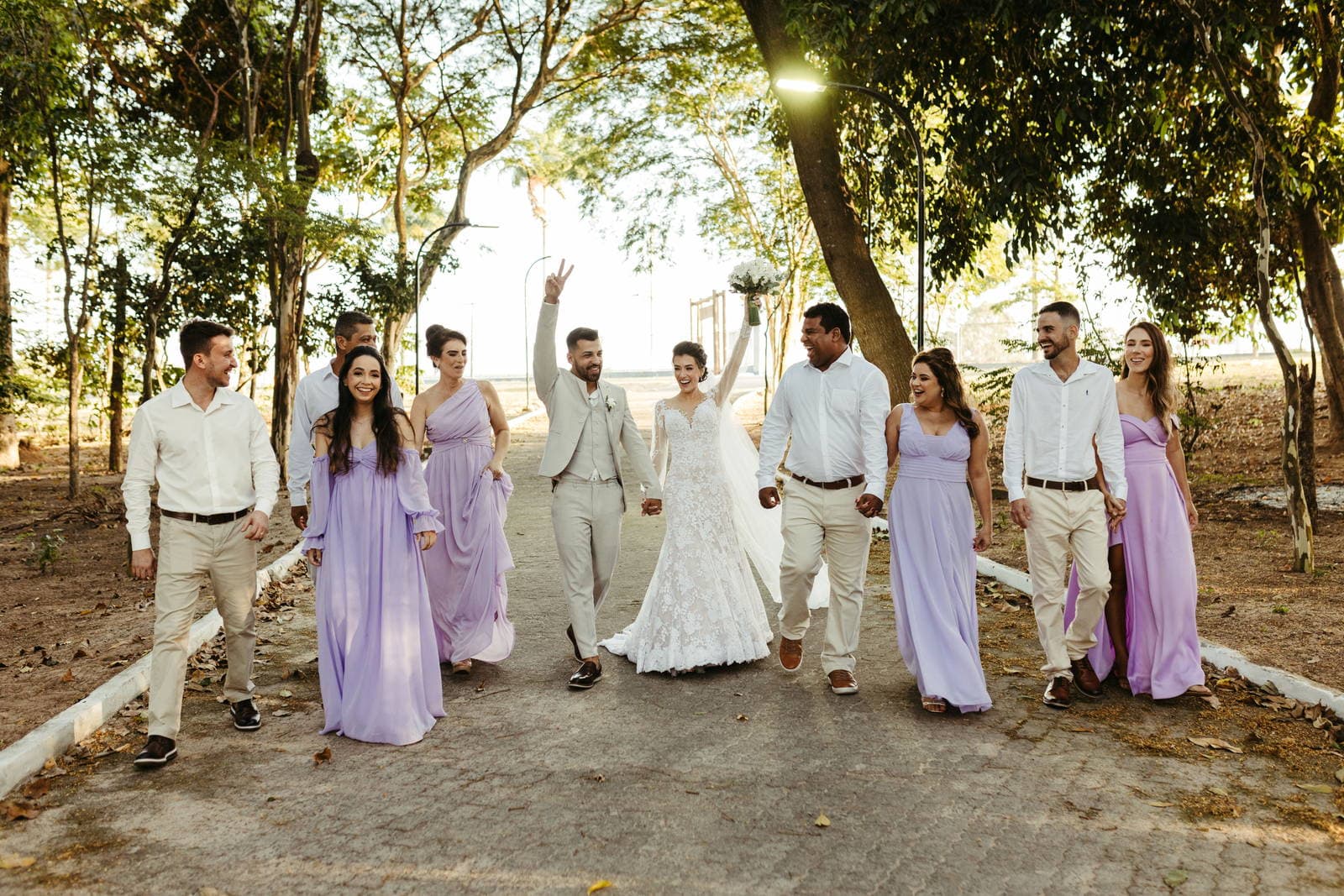
One color, different styles
Everyone wears the same shade, in different silhouettes. This is the safest approach and the easiest to brief. It looks cohesive in photos because the color does the unifying.
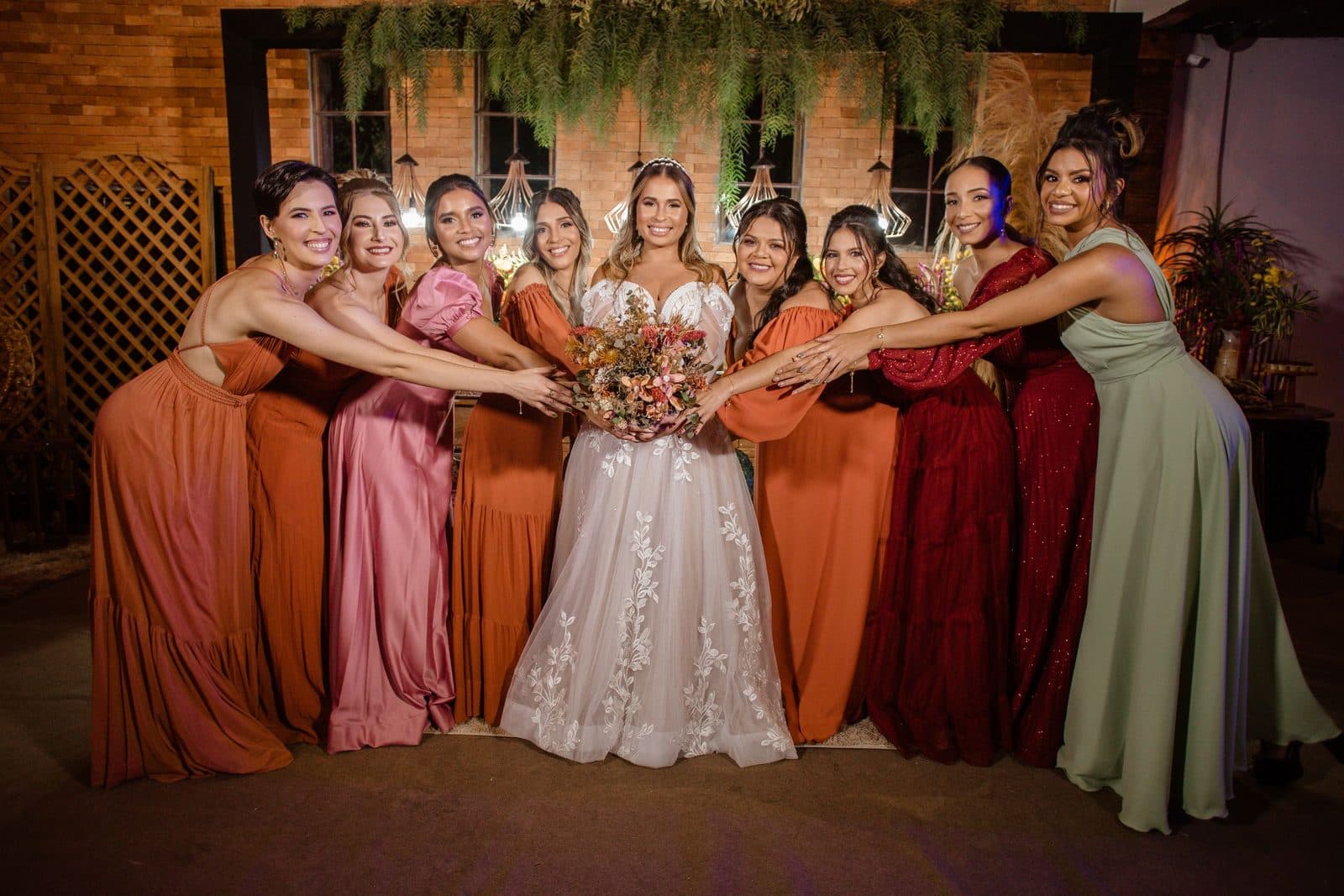
Same color family, different shades
Dusty blues from pale to deep, or terracotta through rust. People can pick the shade that suits their skin tone, and the group reads as a gradient. Give a range, not just a name, because "blue" means very different things to different people.
A curated palette of two to four colors
For example sage, cream, and a warm gold. Bridesmaids choose from the list. It feels richer than a single color and still holds together. Assigning colors to specific people can help avoid six identical sages and no cream.
Print and pattern with a solid anchor
Florals or patterns in a shared palette, balanced by solids. This is the boldest approach and takes the most guidance. Without limits, patterns can compete.
If you are unsure, start with the second or third option. They give variety with a clear safety net.
Make a Palette People Can Actually Shop
A palette is only useful if people can find it in a store. A few things make this much easier:
- Share swatches, not names. "Champagne" and "blush" mean different things everywhere. Send photos of actual fabric or a color chip, and list a few real dresses that fit.
- Give a range of acceptable shades. If you want a tight match, say so. If you are flexible, show the edges of what is okay.
- Offer a shared board. A shared folder of examples, including ones that are not quite right, speeds everything up.
- Consider lighting. A color that looks stunning online can read flat indoors or in a church. If the wedding is at night, tell people.
- Set a decision deadline. Mismatched is easier when everyone has time, but not unlimited time.
Fabric, Length, and Formality
These rules are what keeps a mixed group from looking accidental.
Fabric
Choose one family. Chiffon, crepe, satin, and velvet all catch light differently. A satin next to a matte crepe can look mismatched in a way that no one chose. Pick a fabric type or two and ask people to stay inside it. If the wedding is in winter, velvet or heavier crepe may fit. In summer, chiffon or lighter fabrics usually read better.
Length
The single most useful rule is to fix the length. Floor length across the board looks formal and cohesive, even when everything else varies. A mix of mini, midi, and maxi looks chaotic in formal photos and can look disrespectful at a traditional ceremony. If you want some variety, allow two lengths, such as midi and floor length, and be specific.
Formality
Make sure all the dresses speak the same language. A casual cotton sundress next to a formal satin gown looks like a mistake. Describe the dress code in plain words: "formal evening," "garden party," "black tie optional." If the group is unsure what that means, our dress code explained guide spells out the levels.
Neckline and sleeves
You can leave these open. They are where bridesmaids most want freedom, and they rarely threaten cohesion. If you want to limit it, say "no strapless" or "sleeves welcome."
Accessories
A shared detail ties everything together: the same shoe color, a metallic tone for jewelry, or matching flowers. It is an easy lever that makes a mixed group feel designed.
How to Brief Your Party
This is the step most couples skip, and it is the one that matters most. A clear brief prevents nearly every problem.
Include:
- The palette, with swatches and examples.
- The length and formality, in one sentence each.
- Fabric guidance.
- The budget range, so nobody feels pressure to overspend.
- A deadline for picking a dress.
- How to share choices. A shared board or group chat where everyone posts their pick before buying.
- What happens if something does not work. Whether you will approve choices, and how.
A message that works:
We are doing mix and match dresses. Everyone is wearing floor length, in any fabric that is matte or a soft satin, in one of these three colors: sage, dusty rose, or cream. Please post your pick in the group before you buy, so we can make sure we have a mix. Any neckline or sleeve you like. Budget wise, there is no pressure to spend more than you want. Dresses at $100 to $200 are great, and rented dresses are completely welcome. We would love final choices by March 1.
Posting before buying is the key habit. It lets people catch a color clash early and gives you a way to say "that is lovely, but we already have three of those" kindly.
Keep It Fair on Budget
Mismatched dresses can reduce cost, but only if the brief makes that true.
- State a price range, not a minimum. "Anywhere from $60 to $200" tells people it is okay to spend little.
- Welcome rentals, resale, and dresses people already own. Make these normal, not second best.
- Do not let the most expensive dress set the standard. If one bridesmaid spends heavily, say you love it and move on. Never imply others should match.
- Offer help for those who need it. If a bridesmaid is stretched, ask privately whether a payment, a loan from your own closet, or a different option would help.
- Count alterations. A $90 dress that needs $80 of tailoring is not a $90 dress. Our bridesmaid cost breakdown shows how those costs stack up.
For shared costs like hair, makeup, or a group order of accessories, splitting wedding costs with your party covers ways to keep the numbers clear.
Plan for Photos
A mixed group needs a little more thought in front of a camera.
- Check the palette in daylight and indoor light. Test with a quick group photo before the wedding if you can.
- Mix tall and short, light and dark. An arrangement that alternates tones looks balanced. Clusters of similar colors can look heavy.
- Keep the same length for formal shots. Even if dresses differ, a consistent hem line makes the group look composed.
- Choose a backdrop that supports the palette. A plain wall or foliage shows color best. Busy patterns behind busy dresses compete.
- Share the palette with your photographer. They can plan lighting and poses around it.
- Bouquets matter. Matching flowers across different dresses is the fastest way to unify the look.
If you want a reference for how everyone fits into the wider day, our wedding party coordination guide covers the timeline around photos and getting ready.
Groomsmen Can Mix and Match Too
The same idea works for the other side, and it is often simpler.
- Same suit color, different cuts. Navy suits in slightly different fits, with shared ties.
- Same tie or pocket square, different suits. A shared accent in a range of grays.
- Shared shirt and tie, own jacket. A good option for budgets and body types.
- A shared item in a shared color. Socks, boutonnieres, or cufflinks can unify a group that otherwise varies.
Rental shops make a single uniform easy, and that is fine. But if some groomsmen already own suits, letting them wear what they have can save everyone money. Our groomsman guide covers the costs and expectations from their side.
The brief principle is the same: give a palette, a formality level, a budget range, and a deadline, and ask people to share their choice before they buy.
Common Questions
Are mismatched bridesmaid dresses still in style?
Yes. Mix and match is a long established option and remains popular because it lets bridesmaids choose flattering, affordable dresses. It looks best with a clear palette, consistent fabric and length, and a shared accessory or bouquet that ties the group together.
How do you make mismatched bridesmaid dresses look cohesive?
Fix the things that matter most: a defined palette, one or two fabric types, and a single length. Keep the formality level consistent and add a shared element such as shoes, jewelry tone, or bouquets. Ask everyone to post their choice before buying so you can catch clashes.
What colors work best for mismatched bridesmaid dresses?
Colors in the same family, such as shades of blue or green, are the safest. A curated set of two to four colors that complement each other also works well. Share swatches rather than color names, and check how the shades look in the lighting at your venue.
Should mismatched bridesmaid dresses be the same length?
It is usually the best rule. Floor length across the board looks formal and unified even when everything else varies. If you want variety, allow two specific lengths and describe them clearly, since a mix of mini, midi, and maxi can look chaotic in formal photos.
How do you tell bridesmaids about mix and match dresses?
Send one clear message with the palette, length, fabric guidance, budget range, and a deadline, plus swatches or examples. Ask people to share their pick in the group before buying so you can approve choices early and avoid duplicates or clashes.
Is mix and match cheaper than matching dresses?
It can be, because bridesmaids choose their own price point and can rent or reuse dresses. It is only cheaper if you state a budget range and welcome lower cost options. Include alterations when comparing, since tailoring can add significantly to the total.
The Short Version
Mismatched works when the brief is tight and the choices are free. Pick a palette approach, share swatches, fix the length and fabric family, and add a shared accessory. Tell your party the formality, the budget range, and the deadline, and ask everyone to post their pick before buying. Welcome rentals and dresses people already own. Check the colors in real light, and plan the photos around the mix. Groomsmen can do the same with a shared tie or suit color.
Cohesion does not require uniformity. It requires a clear plan that everyone understands.
Coordinating dresses, deadlines, and budgets across a whole wedding party? Nozari keeps the plan, the tasks, and the group chat in one place, so nobody is hunting for the swatch link. See how it works.