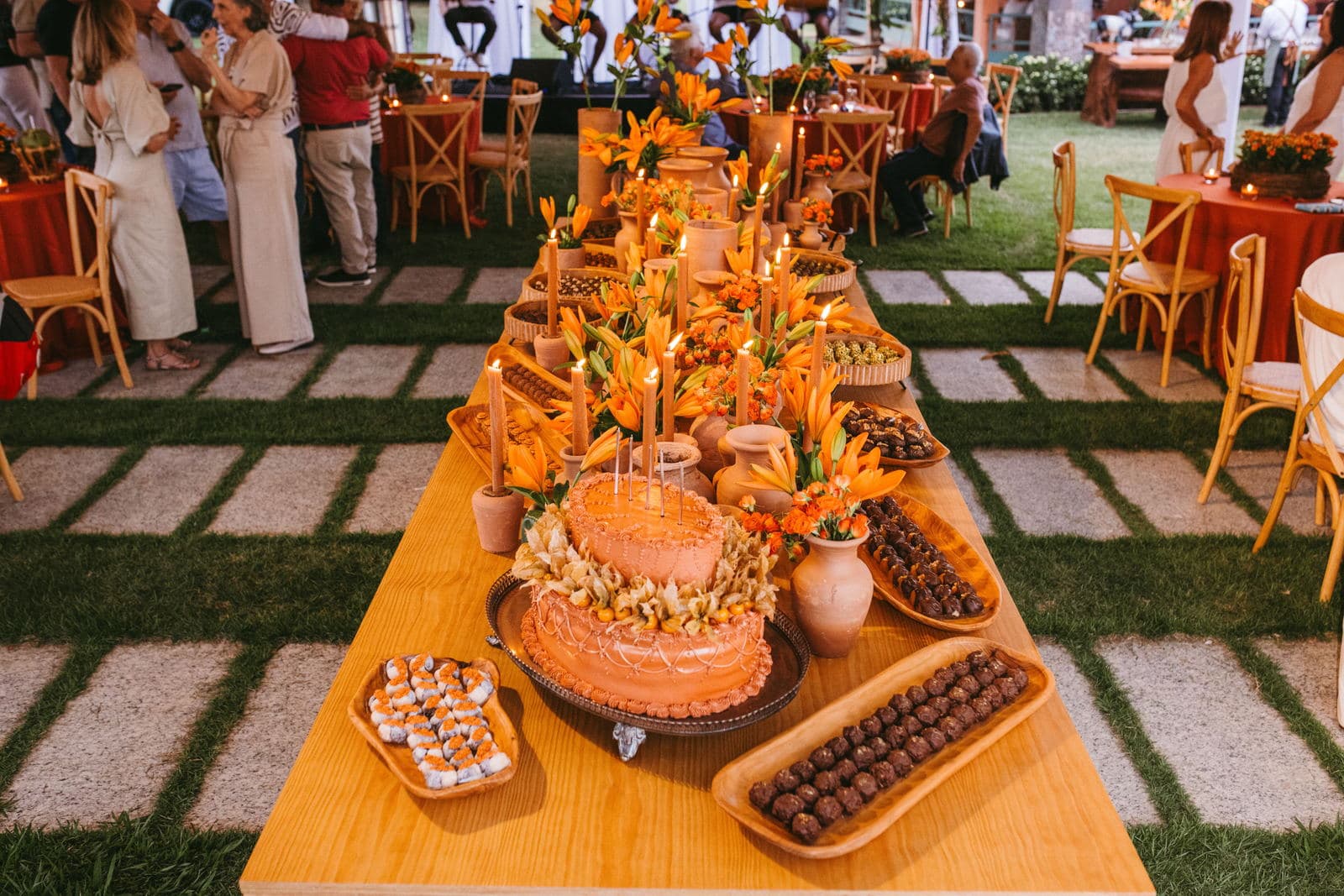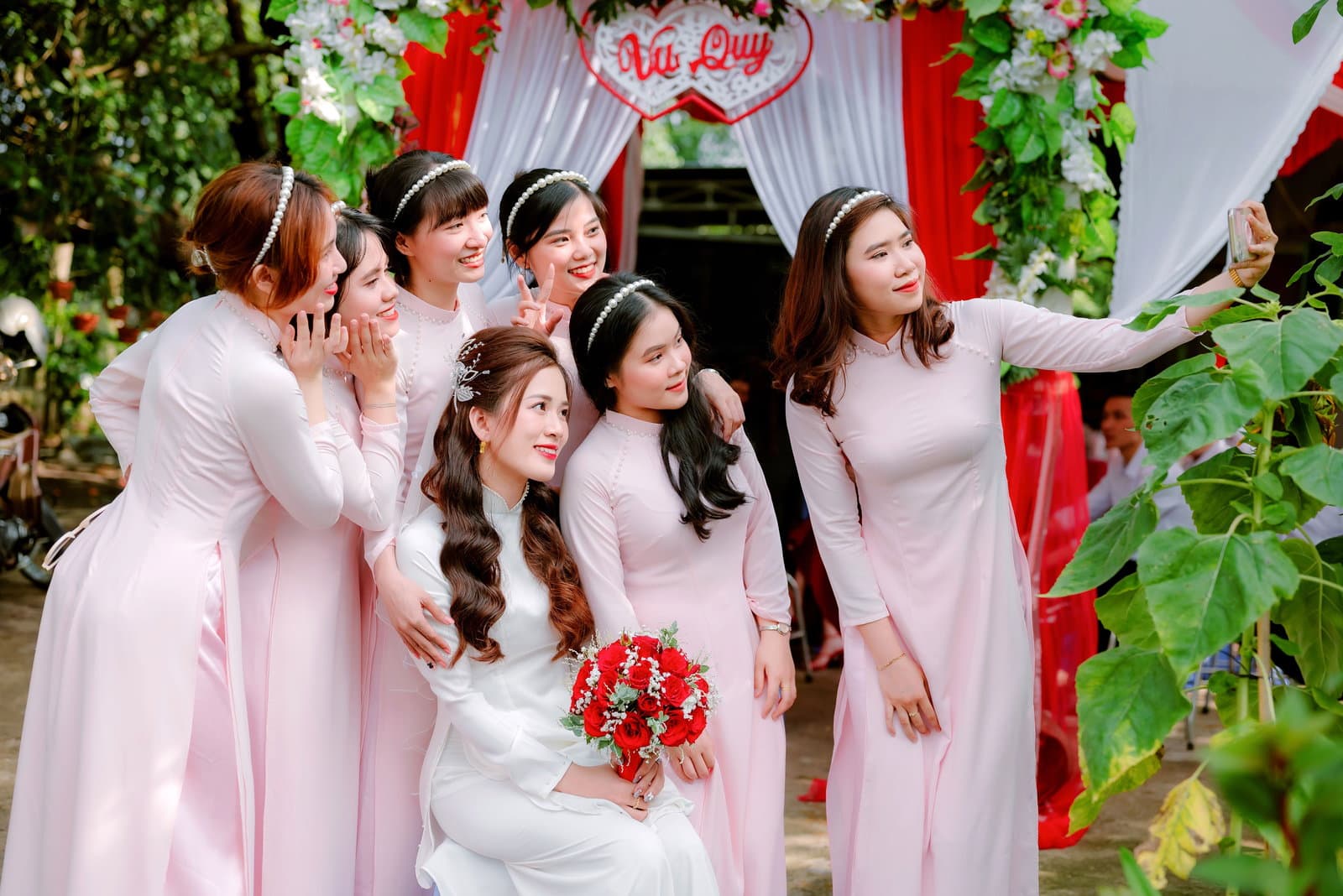
The photographs the couple will most want in five years are not the ones they paid for.
The professional set is excellent and is, by definition, the view from one or two people standing where they were meant to stand. It does not include the twenty minutes in the hotel room before anyone was dressed, the groom's face during the vows seen from the second row, or the dance floor at half eleven once the photographer had gone.
All of that exists. It is on eleven phones, and the normal outcome is that the couple sees about a fifth of it, six weeks late, compressed to the point of uselessness, in a group chat they cannot search.
That is a coordination problem rather than a photography problem, and it has a short fix.
The Problem, Precisely
Four things go wrong, and they go wrong every time.
The photos arrive in the group chat. Which means compressed, out of order, mixed in with four hundred other messages, and stuck in a thread unsearchable by anything except date.
They arrive compressed. Most messaging apps reduce an image substantially before sending, a sensible default for data use and a disaster for anything you later want to print.
Half never arrive at all. Everyone intends to send the album. Then the honeymoon happens, the phone fills, and the intention quietly expires. Our wider guide to sharing wedding photos calls this the real modern problem: not that nobody is taking photographs, but that the couple never sees them.
Nobody knows what has been sent. Four people send the same shot of the first dance, nobody sends the one from the top of the stairs, and no one can tell which is which without opening every message.
The Fix: One Album Per Side
The structure that works is two shared albums rather than one, split by side of the party, with the couple having access to both.
It sounds like a small distinction and it is the whole thing.
Why two. Each side has its own events: its own getting-ready morning, its own bachelorette or bachelor weekend, its own months of pre-wedding bits. Those photographs are relevant to six people and noise to the other six. One album for everybody becomes a feed each person scrolls past, and a feed that gets scrolled past stops being contributed to.
Why not one per event. Seven albums means seven links and nobody remembers which. Two is the number people can hold in their heads.
Who has access. Everyone on their own side, plus the couple. The couple seeing both is the point: they were at everything, and at neither getting-ready room.
One exception, deliberately. Anything kept as a surprise, usually the bachelorette or bachelor weekend and anything assembled for a speech or a gift, lives somewhere the couple cannot see until it is time. Set that up at the start rather than asking people to be careful, which is how a surprise ends up in the main album at two in the morning.
Who Uploads What
Assign this, because a general request produces general compliance. A short list, sent two weeks out:
| Who | What they are best placed to capture |
|---|---|
| Honor attendants | The getting-ready morning, start to finish. The quiet bits especially |
| Party members | The ceremony from the front, which the guests cannot see |
| Everyone | The dance floor after ten, when the professional has gone |
| Whoever is not in a photograph | The photographs, being taken. These are always good |
| Parents and siblings | The family moments the party is not in |
| Anyone at the rehearsal | The rehearsal dinner, which is rarely covered professionally |
Two notes that matter more than the list.
Name the moments nobody covers. The three reliably missing sets are the last hour of the reception, the rehearsal dinner, and the bit between the ceremony and the reception when everybody is standing around with a drink. Ask for those specifically and you will get them.
Do not ask the party to photograph the ceremony from the aisle. They are in the photographs during the ceremony, and a phone held up at chest height is in the professional's frame in every shot, forever. Our role by role breakdown of the wedding day covers what the party should be doing in those twenty minutes, and it is not filming.
The 48 Hour Rule
Upload within forty eight hours of the event, before you leave for home.
The reason is not urgency, it is memory. Two days out you still know which blurry shot was worth keeping and which three were the same moment. Two weeks out you have twelve hundred photographs, no idea which were from the wedding, and a chore you keep deferring. Two months out it is a task you have privately abandoned.
Forty eight hours is also before the phone runs out of space on the honeymoon, which is the most common way a wedding's photographs are permanently lost.
How to make it happen:
- Say the rule out loud before the wedding, as part of the day's instructions rather than afterwards as a request.
- Have someone send one reminder on the Sunday. Not the couple, who should be unreachable. The maid of honor, best man or whoever is holding the day's contact number.
- Make uploading take under two minutes. Select all, upload, done. Anything needing sorting or captioning will not get done by eleven people.
- Ask for everything rather than the best ones. Curation is the step people stall on. The couple would rather have four hundred and delete three hundred than receive nine.
Keeping the Resolution
Worth two minutes of attention, because it is the difference between a photograph that can be printed and one that can only ever be looked at on a phone.
Avoid sending through a messaging app where you can, since most compress heavily by default. Where it is the only option, almost all of them now offer either a higher quality setting or a way to send the file as a document, which preserves considerably more.
Never send a screenshot of a photograph. The most common way an image gets permanently degraded, and it happens most often when forwarding a photo received in a chat, so the loss compounds.
Check the album's own quality setting. Several popular shared-album services default to a storage-saving setting rather than original quality. One look, once, at the start.
Keep your originals until the couple confirms they have everything. A year, ideally. Uploads fail silently, phones get replaced, and the backstop is somebody still having the file.
Video is heavier and more fragile. A thirty second clip of the speech is more likely to arrive intact than an eleven minute one. If you filmed something long and important, say so, and hand it over directly rather than through a chat.
Privacy, Briefly But Properly
Shared does not mean public, and the gap between those two is where almost every bad feeling about wedding photographs comes from.
The couple posts first. Whatever goes on social media, the couple goes first and everyone follows. The one convention worth treating as a rule, and it covers the dress, the first look and the ceremony.
Getting-ready photographs stay in the album. People are half dressed, mid-sentence and unposed, which is exactly why those shots are good and exactly why they are not for anybody's feed.
Ask before posting other people's children. Many parents have a clear position and you will not know what it is.
Respect an unplugged ceremony. If the couple asked for phones away, that includes the wedding party, and the shot you were sure would be worth it.
Agree who can add people to the album. Usually the honor attendant on each side, which keeps a cousin's partner's roommate from ending up with the getting-ready set.
If someone asks for a photo to come down, it comes down. No discussion needed.
The Couple's First Look
One small thing worth doing deliberately.
Do not send the couple a trickle of photographs during the wedding or the honeymoon. A photo arriving in isolation is a notification rather than a gift.
Instead, let the albums fill for a week, then send one message: it is all here, there are four hundred and six of them, go and have a look when you have an evening. A couple sitting down with a week-old album of things they did not see is one of the genuinely lovely small moments after a wedding, and it is destroyed by being spread across sixty notifications.
The professional photographs arrive four to eight weeks later. The party's album fills that gap, and it is often the one they go back to more, because it is the view from inside the day.
If You Are the One Organising It
Likely the maid of honor or best man, and a thirty minute job in total.
Four weeks out: set up the two albums and the private one for any surprise. Check the quality setting.
Two weeks out: send the links with the who-uploads-what list and the forty eight hour rule in one message, not three. Our note on why group chats fall apart explains why it should go somewhere findable rather than into a thread with four hundred messages on top of it by the wedding.
The day before: one line at the rehearsal dinner. "Everything goes in the album, within two days, and the couple sees it the week after."
The Sunday after: one reminder. Ten days after: the message to the couple.
That is the whole job, and it produces several hundred photographs the couple would otherwise never have seen.
Common Questions
How should a wedding party share photos with the couple?
Two shared albums, one per side of the party, with the couple having access to both. Assign who covers which moments, ask people to upload everything rather than curating, and set a forty eight hour deadline. Keep anything intended as a surprise somewhere the couple cannot see.
Why do wedding photos lose quality when shared?
Most messaging apps compress images substantially before sending, which saves data and discards detail you cannot recover. Screenshots are worse again. Use a shared album set to original quality, or send files as documents where the app allows it.
How long should the wedding party wait to post wedding photos?
Until the couple has posted first, usually within a day or two. That covers the dress, the first look and the ceremony. Getting-ready photographs are best kept in the shared album rather than posted, and anything involving someone else's children should be checked with that parent.
What photos does a wedding party take that the photographer does not?
The getting-ready morning in full, the ceremony seen from the front rather than the aisle, the gap between ceremony and reception, the rehearsal dinner, and the last hour of the dance floor. Those five sets are reliably missing from a professional gallery.
Should the couple be sent photos during the wedding weekend?
Better not. A photograph arriving in isolation during a wedding or honeymoon is a notification rather than a gift. Let the albums fill for a week, then send one message telling them everything is there. One sitting with the whole album beats sixty separate alerts.
The Short Version
Two albums, one per side, couple has access to both, plus a private one for anything that is a surprise. Assign who covers what, with attention to the getting-ready morning, the rehearsal dinner and the last hour of the reception. Upload everything within forty eight hours, uncurated. Keep the resolution by avoiding chat apps and screenshots and checking the album's quality setting once.
The couple posts first, getting-ready photographs stay in the album, and the couple gets one message ten days later rather than a trickle for a month.
Two albums, one per side, couple sees both, bachelorette planning hidden from them? Nozari does photo sharing that way by design. See how it works.